LDS Flow A comprehensive online experience for members of The Church of Jesus Christ of Latter-day Saints.
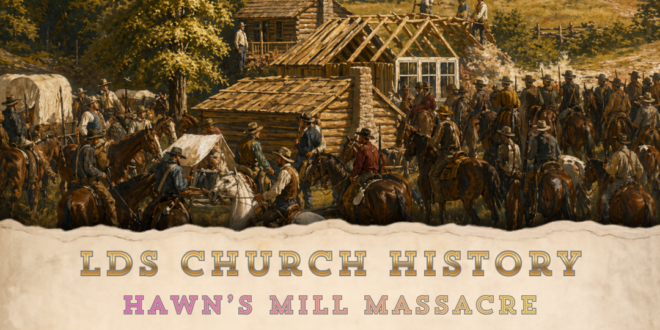
The Hawn’s Mill Massacre: A Defining Tragedy
The Hawn’s Mill Massacre stands as one of the most brutal and defining moments in early Latter-day Saint history, a violent eruption that left families shattered and a community forever changed. What happened in that small Missouri settlement was not just another clash in a growing conflict, it was a calculated act of terror that exposed how fragile life had become for the Saints during the turmoil of 1838. The echoes of that day would carry far beyond the immediate loss of life, shaping memory, identity, and faith for generations.
Stories from the Hawn’s Mill Massacre quickly became central to how the Saints understood their suffering in Missouri. These were not distant retellings or exaggerated folklore, but deeply personal accounts from those who lived through the chaos. The fear, the confusion, and the sudden violence were etched into the minds of survivors, and those memories became part of a collective narrative that refused to fade. In many ways, the tragedy became a defining symbol of both persecution and perseverance.
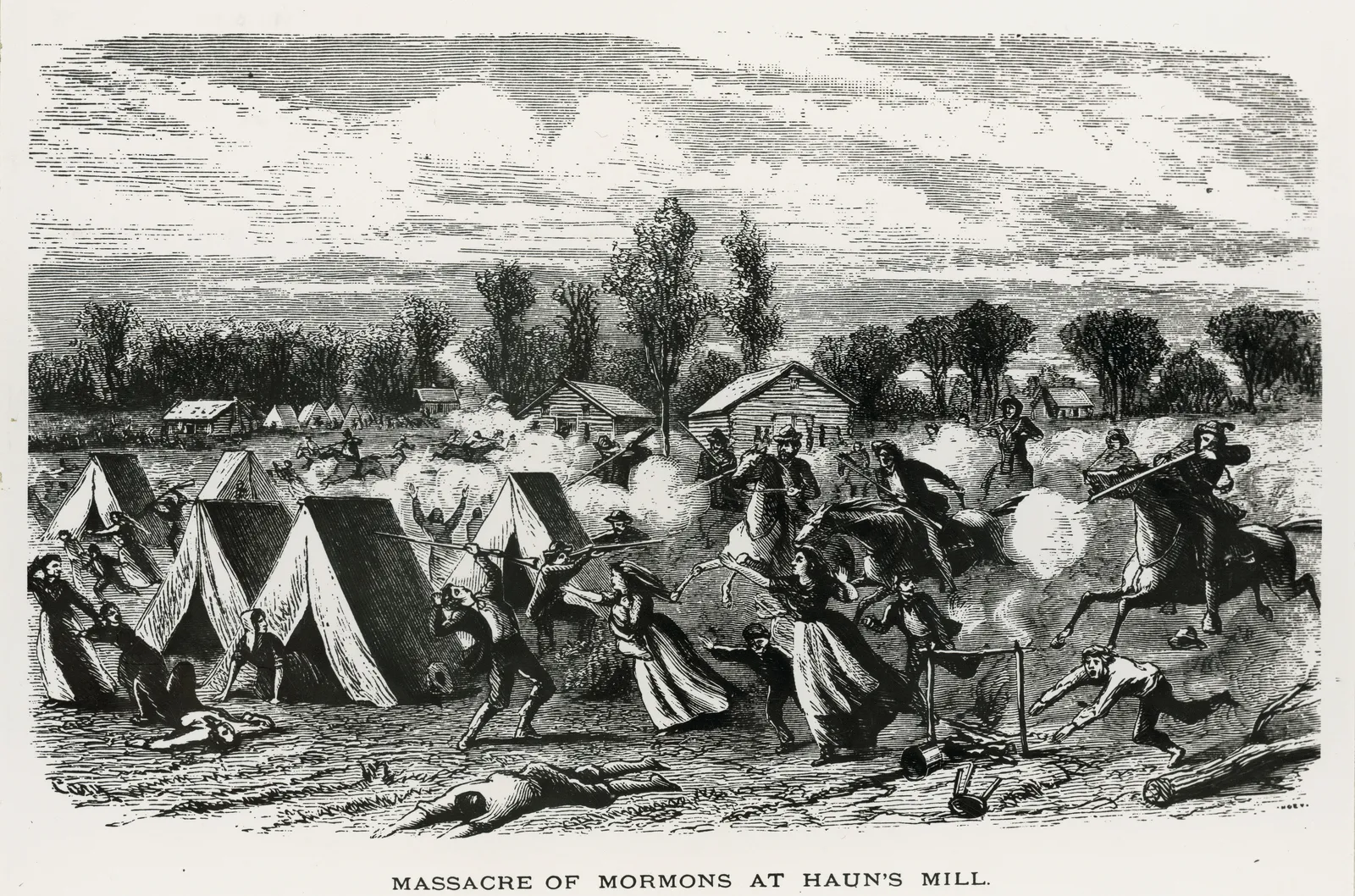
Yet even within that darkness, the story of the Hawn’s Mill Massacre is not only about death and destruction, but about what people did in the moments that followed. It is about how individuals responded when everything familiar collapsed, when safety disappeared, and when survival depended on faith as much as action. This is where one of the most powerful stories connected to the massacre begins to emerge.
Amanda Barnes Smith: Faith in the Midst of Horror
Among the many voices tied to the Hawn’s Mill Massacre, none stands out more than Amanda Barnes Smith. Her experience captures both the devastation and the quiet, almost unexplainable strength that can rise in the face of overwhelming loss. After the attack, she was left in a nightmare scenario, her husband and ten year old son killed, her family torn apart, and her seven year old son gravely wounded.
In that moment, Amanda Barnes Smith did not have time to collapse under grief. Faced with her son’s life hanging in the balance, she turned to prayer, seeking guidance in a situation that offered no clear answers. What followed has been remembered as a moment of personal revelation, where she felt directed in how to treat her child’s wounds. Against all odds, her son survived, and that survival became one of the most enduring testimonies connected to the Hawn’s Mill Massacre.
Her story is not just a historical footnote, it is a powerful example of faith under pressure. While the massacre itself highlights the brutality faced by the Saints, Amanda’s experience reveals something deeper, that even in the worst circumstances, there were moments where belief, action, and divine guidance intersected. It is this balance between tragedy and faith that gives the Hawn’s Mill Massacre its lasting emotional weight.
Violence, Confusion, and Historical Reality
The timing of the Hawn’s Mill Massacre has long fueled debate and assumption, particularly because it occurred just three days after Missouri governor Lilburn Boggs issued his extermination order. That order, which authorized efforts to drive the Saints from the state, has often been seen as the direct cause of the massacre. However, the historical reality is more complex than that simple connection.
Evidence suggests that the attackers involved in the Hawn’s Mill Massacre may not have even been aware of the extermination order at the time. Instead, the violence appears to have been driven by escalating tensions and acts of retaliation tied to earlier conflicts in nearby regions like Daviess County. This paints a picture not of a single directive leading to violence, but of a volatile environment where fear, anger, and lawlessness combined to create deadly consequences.
Understanding this complexity matters because it shifts how the Hawn’s Mill Massacre is viewed. It was not just the result of official policy, but of a broader breakdown in order, where vigilante action replaced structured authority. That reality makes the event even more unsettling, because it shows how quickly communities can descend into chaos when restraint disappears.
Could the Tragedy Have Been Avoided?
Before the violence broke out, Joseph Smith had counseled Saints living in outlying settlements like Hawn’s Mill to gather to Far West, a location believed to offer greater safety. In hindsight, this counsel has raised difficult questions about whether the Hawn’s Mill Massacre could have been avoided if those instructions had been followed more strictly. It is a question that has lingered for nearly two centuries.
However, the situation on the ground was far from simple. Many of the Saints at Hawn’s Mill had already faced harassment, intimidation, and even disarmament during their journey into Missouri. Leaving was not just a matter of packing up and relocating, it meant risking exposure, vulnerability, and potentially encountering the same hostile forces along the way. For many, there may not have been a clear or safe opportunity to reach Far West.
In the end, the idea that the Hawn’s Mill Massacre could have easily been prevented does not fully account for the reality these people were living in. They were navigating uncertainty in a hostile environment, making decisions with limited information and even fewer options. Their story is not one of simple disobedience or poor judgment, but of human beings doing their best in a situation that had already spiraled beyond their control.