LDS Flow A comprehensive online experience for members of The Church of Jesus Christ of Latter-day Saints.
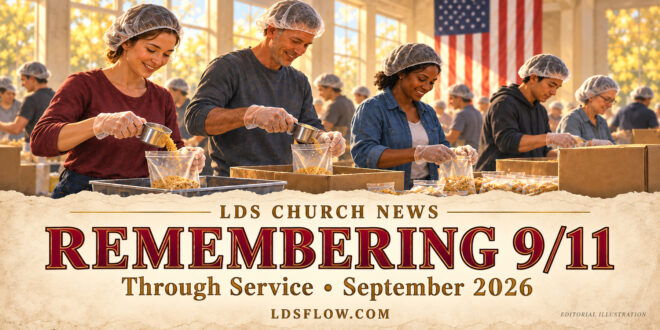
Twenty-five years after September 11, Latter-day Saints joined their neighbors in a form of remembrance that left something useful behind: meals, improved school spaces, and completed community projects.
In a September 15, 2026 report, Church Newsroom described service on September 11 and 12 involving members of The Church of Jesus Christ of Latter-day Saints in communities across the United States. Through JustServe and partnerships with other organizations, volunteers took part in the wider national observance.
The news offers more than a collection of impressive totals. It shows how remembrance can bring people of different backgrounds into the same room to meet an immediate need. The work belonged to a broad community effort, with Church members participating alongside many others.
What Church Newsroom reported
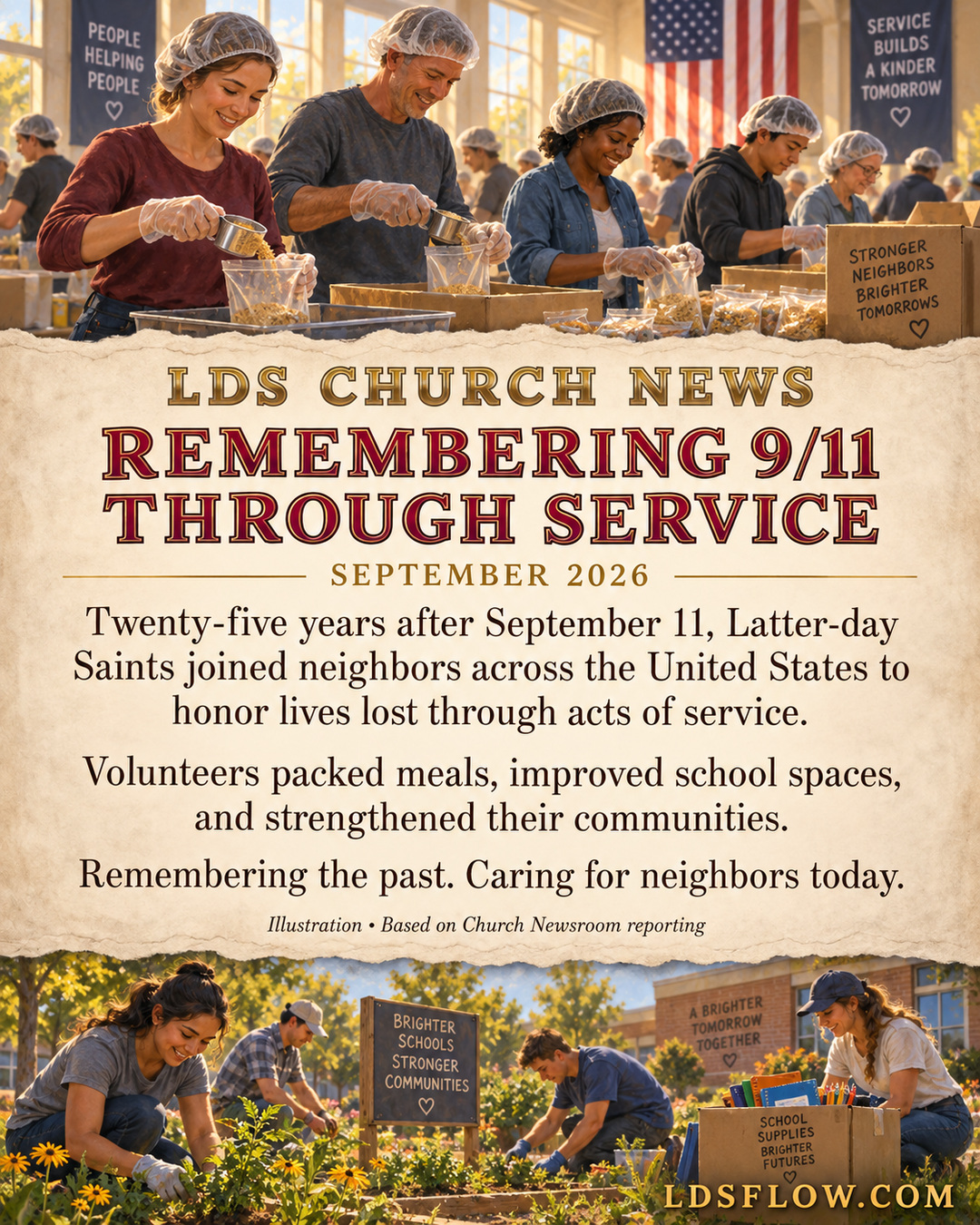
In New York, a multiday effort packed more than 3 million meals for people facing food insecurity. In Denver, about 900 volunteers packed 325,000 meals, with 60 Latter-day Saint missionaries participating. The report identified Food Bank of the Rockies and Community Food Share as local distribution partners.
Chicago volunteers helped at Beulah Shoesmith Elementary School, painting, gardening, and organizing spaces. In Utah, the report described more than 1,000 volunteers on 51 Cache Valley projects and approximately 400 volunteers on nearly 30 projects in Heber Valley.
Those are figures reported for the respective events, not a count of work performed exclusively by Church members. They should not be added together as a separate Church-wide total.
A national observance shared by many communities
A separate September 15 release from AmeriCorps places the local stories in a larger setting. The agency reported meal packing, memorial tree planting, veterans’ cemetery cleanups, and other projects across the country. Its nationwide meal-packing figure was 18 million meals involving 50,000 volunteers in 51 cities.
That national figure has a different scope from the Church Newsroom examples. It represents the wider effort described by AmeriCorps, not a Church-only program. Treating the reports as complementary accounts gives readers a clearer picture of the partnerships involved.
There is something significant about that shared ownership. A congregation can contribute organization and willing volunteers while a food bank supplies knowledge about distribution. A school can identify the work that would actually help its staff. The result depends on each participant doing a part that fits the need.
Why September 11 became a day of service
AmeriCorps’ overview of the National Day of Service and Remembrance traces the effort to families who lost loved ones and began advocating a meaningful service tribute in 2002. Federal recognition followed in April 2009.
That background matters. Volunteer projects are one way of honoring lives lost and people who stepped forward to help; they do not replace remembrance, grief, or the stories of affected families. A project can make room for both quiet reflection and useful work.
The anniversary also reaches people with very different relationships to the past. Some adults carry direct memories of the attacks. Younger volunteers know the events through their families, teachers, and historical accounts. Serving together offers an opportunity to listen across that difference without expecting everyone to remember in the same way.
What JustServe contributes
JustServe helps connect people with community service opportunities. The Church’s published missionary community-service guidance describes participation with people of all faiths and distinguishes service from proselytizing. It also emphasizes reliability, useful work, and thanking the organization that hosts the project.
For readers, the practical value is straightforward: an interest in helping can become an actual appointment with an organization that has asked for assistance. That is especially useful when a family or small group wants to contribute but does not know which local organizations need volunteers.
The name is also a helpful reminder to keep the service itself central. A person receiving food or assistance should not become a prop for someone else’s message. Good intentions are best expressed by listening to the host organization and treating everyone involved with dignity.
Meal packing is one step in a longer chain
A packed bag is visible and easy to count. The work required to get that food to a household is less visible. Food must be handled appropriately, stored, transported, and distributed through organizations that understand their communities.
Readers can learn directly about the Colorado partners through Food Bank of the Rockies and Community Food Share. Following the organizations’ own information is a better starting point for volunteering or contributing than assuming every food bank needs the same items or has the same procedures.
The broader lesson is to ask what will help before deciding what to give. A group may be eager to organize a collection, while the receiving organization needs a scheduled sorting crew. A donation of time is most useful when it meets an actual opening.
How families and wards can continue the work
The anniversary projects have already taken place, but readers do not have to wait for another national observance to serve. The following are practical suggestions for planning a new local effort, not additional claims about what happened at the September events.
- Start with a request. Look for a current opportunity on JustServe or contact a local nonprofit directly. Ask what it needs now.
- Check who can participate. Confirm the minimum age, accessibility, group size, clothing, and time commitment. Choose something your actual group can do well.
- Let the host set the task. A school, pantry, or neighborhood organization knows its own priorities. Offer help without making extra work for the people coordinating it.
- Keep the commitment manageable. A small group that arrives prepared and finishes its assignment can be more useful than a large group without a clear plan.
- Ask about a next visit. If the first experience goes well, find out whether the organization needs continuing help. Reliable relationships can outlast the attention around a single event.
Families can also take a few minutes afterward to discuss what they learned. What did the organization need? Which task was more important than it first appeared? What would make the next visit easier for the people hosting it? These questions keep the focus on learning to help well.
A Latter-day Saint reflection on showing up
For Latter-day Saints, service provides a concrete setting in which to practice concern for a neighbor. That concern can be expressed without an audience, a dramatic story, or a large project. Arriving on time, following instructions, cleaning up afterward, and returning when needed are modest actions with real value.
The September reports also offer an encouraging picture of cooperation. People do not need identical backgrounds to agree that children deserve a cared-for school or that a family should have food. A shared task gives neighbors a reason to meet and something worthwhile to accomplish together.
For related reading, LDS Flow’s summary of Elder Gary E. Stevenson’s message on peacemaking considers that wider responsibility. Our reflection on the pioneer spirit in everyday life explores how practical faith can shape work in the present.
Remembrance with work still ahead
The September 2026 projects are a recent example of Church members contributing to a much larger community effort. Their significance is found both in the completed tasks and in the willingness to take part with neighbors.
For anyone wondering what to do next, the invitation can be modest: find one real need, make one realistic commitment, and follow through. The anniversary has passed. The opportunity to care for someone nearby has not.
Reporting note: Event details are attributed to Church Newsroom’s September 15, 2026 release; national context comes from AmeriCorps. The practical suggestions and reflection are LDS Flow editorial commentary. Images are AI-generated editorial illustrations, not photographs of the reported events. Sources checked September 17, 2026.