LDS Flow A comprehensive online experience for members of The Church of Jesus Christ of Latter-day Saints.
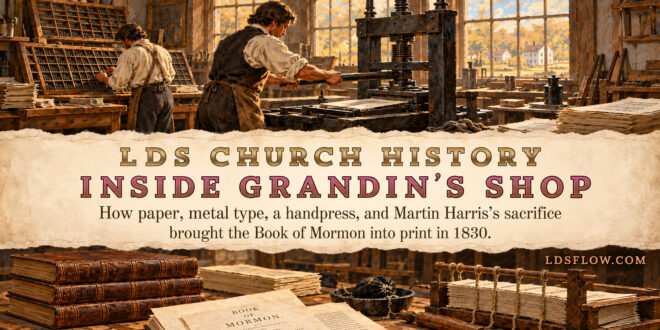
Before there was a Book of Mormon to place on a shelf, there were handwritten pages to protect, a printer to persuade, and a bill that somebody had to pay. In Palmyra, New York, the bill came to $3,000. Martin Harris put his property behind it. Upstairs in Egbert B. Grandin’s shop, the work began one small piece of metal type at a time.
The first edition looks wonderfully unfamiliar to a modern Latter-day Saint reader. The text runs across the page in a single column. The chapters are much longer. The familiar verse numbers are absent. At the back, rather than the front, readers encounter the testimonies of the Three and Eight Witnesses. This was a book meant to be opened and read straight through, before a century of study aids gave us quite so many ways to jump around it.
You can turn its pages online. The type still carries the work of the people who set it, checked it, inked it, and pulled it through a handpress. Its publication was an undertaking in its own right, stretching from the summer of 1829 into the spring of 1830, with more binding still to come.
Joseph Smith and his supporters believed they were bringing forth a sacred record by the gift and power of God. The workers Grandin hired did not have to share that belief to do their jobs well. They needed legible copy, enough type, stacks of paper, and payment. For months, those different commitments occupied the same building.
Explore the story
- A manuscript with a difficult past
- Finding someone willing to print it
- Martin Harris puts land behind the promise
- Protecting the book before it existed
- Oliver Cowdery’s second manuscript
- John Gilbert and the missing punctuation
- What a handpress could do
- The long autumn and winter
- Abner Cole borrows more than a press
- A second agreement and a Canadian journey
- The people downstairs
- March 26, 1830: books for sale
- The first readers carry it onward
- The papers that survived
- Sources and further reading
1828–1829: a manuscript with a difficult past
The manuscript arriving at Grandin’s shop came with a history that made carelessness hard to forgive. In 1828, Martin Harris had taken 116 pages of an earlier portion of the translation to show others. The pages disappeared. Joseph did not simply dictate that portion again. His account of the loss became the preface to the 1830 edition, greeting purchasers before they reached Nephi.
That preface explains why the published book begins where it does. The people preparing the manuscript for publication had already experienced a loss they could not undo. A second copy would soon become a practical necessity.
Most of the surviving Book of Mormon text was dictated during the spring and early summer of 1829, with Oliver Cowdery serving as the principal scribe. The work moved from Harmony, Pennsylvania, to the Whitmer home in Fayette, New York. As it approached completion, Joseph and Martin began seeking a printer. Finishing the translation would leave them with a manuscript. Getting it into thousands of homes required an entirely different set of skills.
The Joseph Smith Papers’ introduction to this period brings those activities together: translating, negotiating, copying, printing, and preparing to organize a church. They overlapped. There was no long, comfortable interval in which everyone could put down a pen and learn the publishing business.
Summer 1829: finding someone willing to print it
Egbert Bratt Grandin was a young printer with an established local business. Born in 1806, he had worked in the printing trade before becoming a proprietor of the Wayne Sentinel in 1827. He was only in his early twenties when Joseph and Martin approached him. The man whose name would appear beneath the Book of Mormon’s title was scarcely older than Joseph himself.
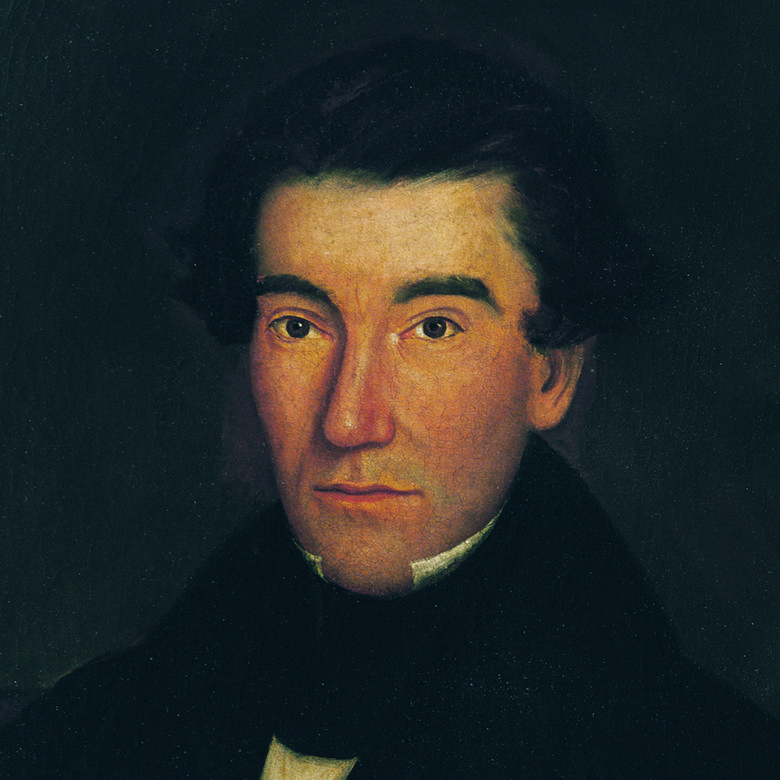
Grandin initially declined. A large religious book associated with disputed claims about gold plates brought reputational concerns, but also a straightforward business problem. This was a substantial job for a local newspaper office. Buying materials and tying up workers for months would be expensive. Paper suppliers could not be paid with encouraging reports about future readers.
Joseph and Martin looked beyond Palmyra. Jonathan Hadley and Thurlow Weed also declined; Elihu F. Marshall in Rochester offered a way forward. With an alternative available, the men approached Grandin again. This time they reached an agreement. Keeping the work nearby would make it easier for Joseph’s associates to deliver manuscript pages and watch over the process.
The copyright document’s historical introduction follows the negotiations through the later accounts of printers and associates. Grandin’s acceptance was a commercial arrangement. He did not become a convert as part of the bargain. He agreed to produce the book on terms that protected his business.
That is a more interesting beginning than a simple division into believers and enemies. Joseph wanted the record published. Martin believed it was worth financing. Grandin wanted to be paid for an unusually demanding job. Their reasons differed; their next several months would be closely connected.
August 25, 1829: Martin Harris puts land behind the promise
Martin Harris could offer what Joseph could not: property substantial enough to secure the printing bill. On August 25, 1829, he mortgaged a 151-acre portion of his farm for $3,000. Grandin would print 5,000 copies. The mortgage gave Harris eighteen months to meet the obligation.
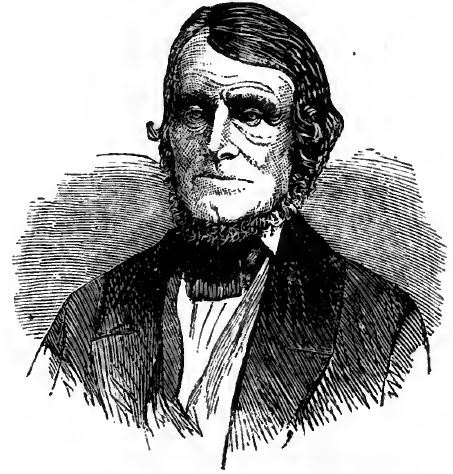
Harris did not hand Grandin a sack of $3,000 in coins on the day he signed. The mortgage secured the obligation with land. Harris could remain on the property during its term and could sell it to settle the debt. If he failed to pay, the property could be sold to recover the money. The arrangement made printing possible while leaving the risk very close to home.
The Joseph Smith Papers’ treatment of the revelation now known as Doctrine and Covenants 19 explains that financial setting. Its counsel to Martin was direct: he was to give freely toward printing. The section also speaks at length of Jesus Christ’s suffering and repentance. His financial decision belonged to a religious commitment, not merely an expectation of selling books.
It is tempting to move quickly past the mortgage because we know the book appeared. Harris did not possess our view from two centuries later. He had a farm, a family, skeptical neighbors, and a deadline. Five thousand printed copies would be inventory until someone bought them.
The basic arithmetic was encouraging on paper. The $3,000 contract divided across 5,000 books came to sixty cents per copy. That was the production contract spread across the whole edition, not a retail price and not a guarantee of profit. The books still needed customers, and money arriving later would not erase a payment due sooner.
June 1829: protecting the book before it existed
One piece of the publishing work had begun before the mortgage. A copyright record dated June 11, 1829, identified the Book of Mormon and Joseph Smith’s claim to control its publication. The title page had been deposited with the clerk of the federal district court for the Northern District of New York.
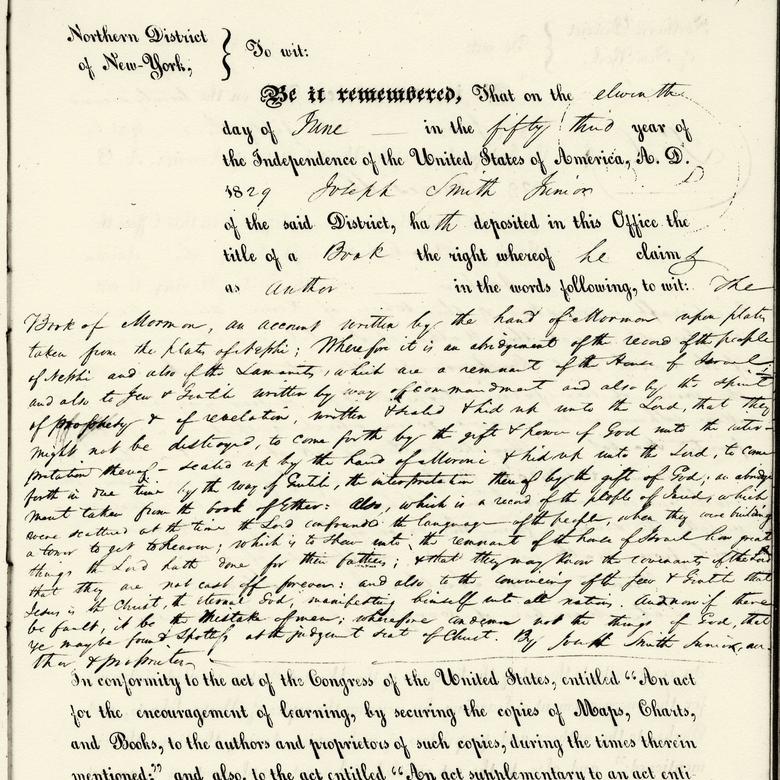
The certificate survives. Exactly who carried out the application is less certain. Older descriptions have Joseph personally traveling to Utica; the Joseph Smith Papers editors consider a representative or a mailed application more likely. We do not need to put him on a particular road to understand what the document accomplished.
Readers opening an 1830 copy see Joseph described as “Author and Proprietor.” That wording belongs in the publishing and copyright setting. In his preface, he described the work as a translation. The title page’s account of the ancient record and its purpose was there for readers to examine, too.
The protection would soon have a very practical use. A competing publisher did not have to steal the guarded manuscript if he could get access to the printed pages already sitting in the shop.
Autumn 1829: Oliver Cowdery’s second manuscript
Oliver Cowdery returned to work he had already done once. During the translation, he had written much of the text as Joseph dictated. Now he copied it again for the printer. The original could remain elsewhere while the copy went into a room full of ink, metal, paper, and people with other jobs to finish.
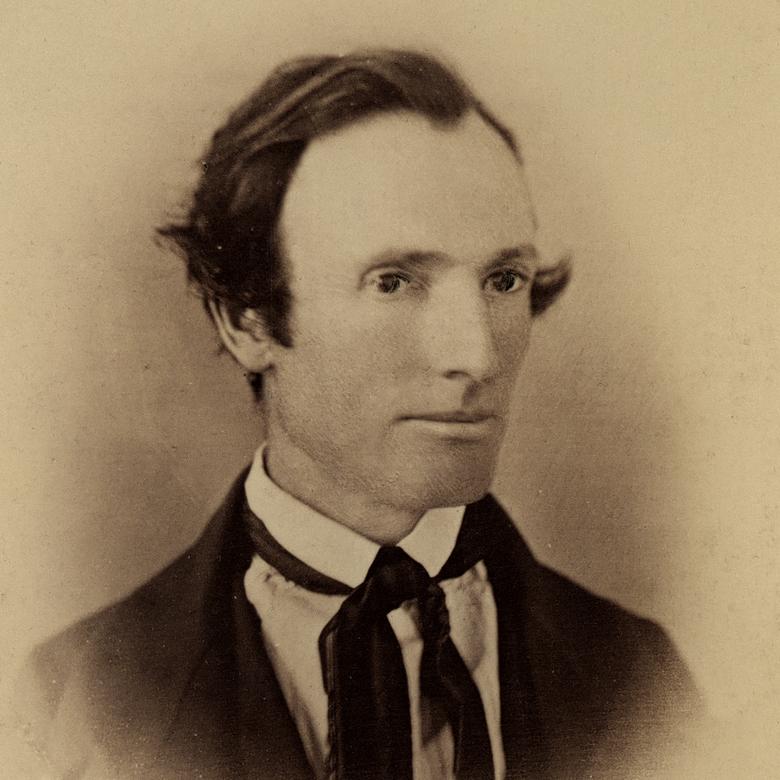
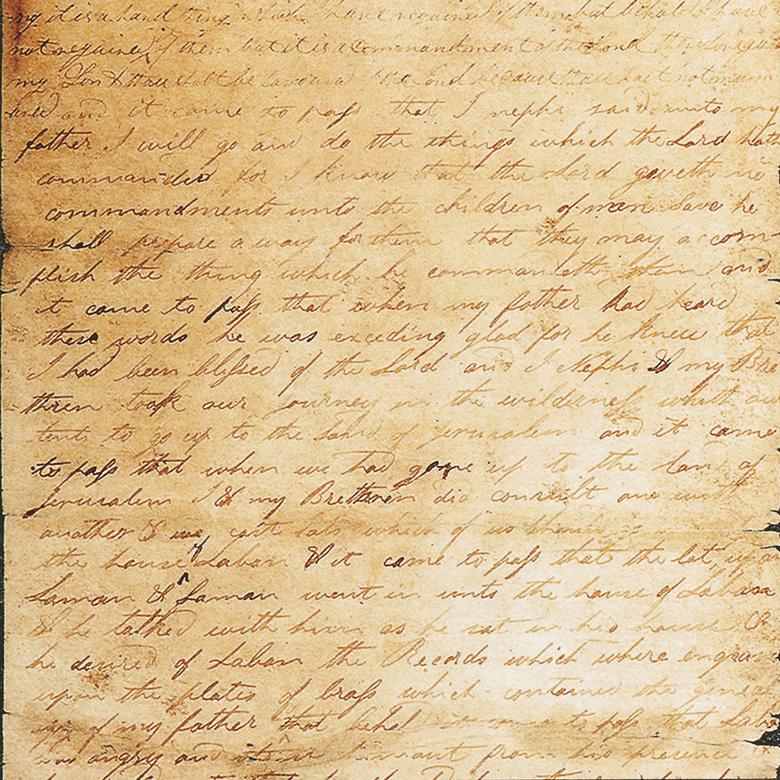
The surviving printer’s manuscript allows scholars to follow the hands doing that work. Cowdery copied about 84 percent. A second, unidentified scribe copied most of the remainder, while Hyrum Smith contributed a small amount. Older histories assign additional names to the copying; the manuscript study leaves that second hand unidentified.
This was not a completed backup delivered in one handsome bundle. Copying continued while the book was being set in type. On November 6, Oliver told Joseph he had reached Alma’s instructions to his sons. He had written his way through a little more than half of the printer’s manuscript, with more still waiting.
His letter is a welcome interruption to the view we get from later memories. There are family updates, concern about health, and a hoped-for completion date. Printing was moving slowly. Oliver still thought it might be finished by the beginning of February. It would not be.
He also wrote at length about Christ, mercy, and repentance. Those were not editorial reflections added to the printing story generations later. They were Oliver’s concerns while he was living through it, before the book had reached the store counter. Copying scripture, checking proofs, and religious conviction were occupying the same days.
Hyrum helped keep pages moving between the copyists and the printer. Lucy Mack Smith later remembered instructions that both manuscripts were never to be taken to the office together and that a companion should accompany the person carrying them. The precautions sound less excessive when placed beside the lost 116 pages.
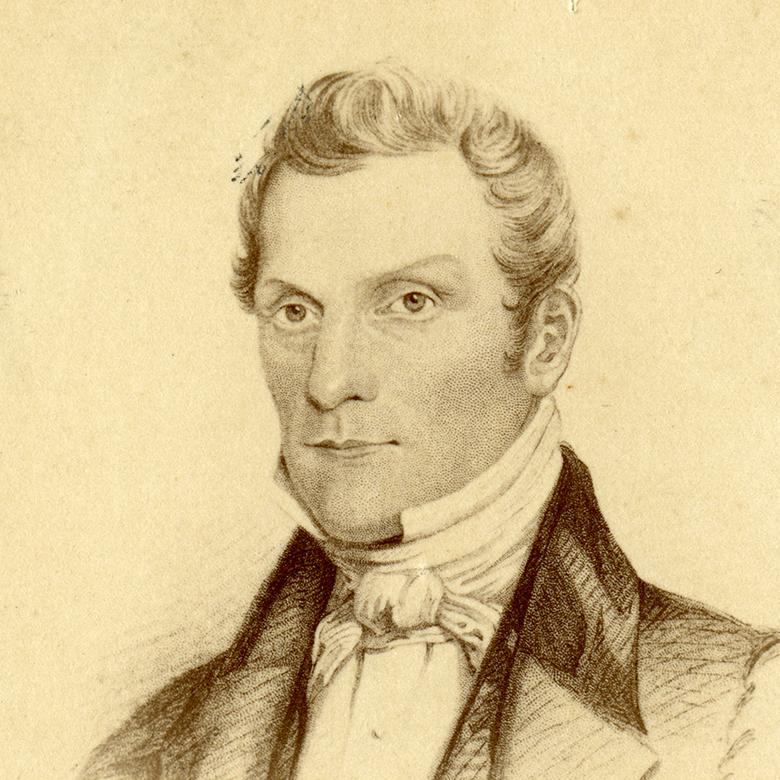
The arrangement required trust to grow by degrees. The printer needed time with the copy. Hyrum needed assurance that it would come back. Meanwhile, somebody had to keep the next pages ready. A manuscript protected so carefully that nobody could use it would have made a very safe unpublished book.
John Gilbert and the missing punctuation
John H. Gilbert was the experienced compositor who set most of the Book of Mormon’s type. A compositor takes the written copy and builds it into printable lines, selecting individual pieces of metal from a type case. Gilbert had practiced his trade for years before the Book of Mormon arrived. Grandin had hired someone who knew how to make a page.
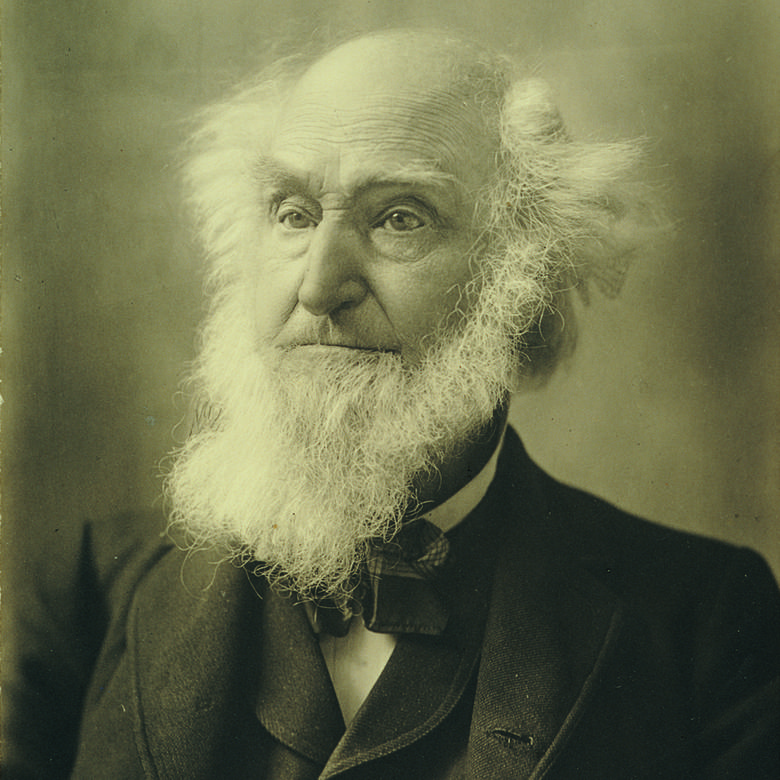
What he received was readable handwriting with very little punctuation. A long run of words might be intelligible to the person copying it, but a printed page required decisions about where readers should pause and where a new paragraph should begin. Gilbert supplied much of that punctuation and paragraphing.
In an account written in 1892, he remembered asking Hyrum to let him take pages home so he could prepare them in the evening. Hyrum initially refused. After Gilbert gave his word that the pages would be returned, the arrangement changed. Gilbert recalled taking the manuscript home for a few nights and punctuating it.
The Church History Museum’s account connects that memory to the manuscripts and printed text. Punctuation was a printer’s contribution to the reading experience. It did not arrive with the same status as the words Joseph had dictated.
Gilbert’s fullest recollection came more than sixty years after the work. That gap deserves attention without throwing away his testimony about his own trade. Textual scholar Royal Skousen tested the 1892 account against the surviving evidence and found its technical details strikingly dependable. The manuscript and books can help check the old printer’s memory.
The work remains visible. Marks, corrections, and the arrangement of the printed text give researchers something more substantial than a story about a busy room. In places, the printer’s manuscript was even cut so more than one compositor could work from different portions. These were working papers, expected to survive handling.
Gilbert had to read carefully without assuming he was free to rewrite. He later remembered asking about a grammatical problem and being told to set the copy as written. That distinction left the first edition with the language of its manuscript and the practical intervention of a man trying to make it readable.
A page built from metal, then a sheet pulled by hand
The restored type cases show the job at a useful scale. Each compartment holds pieces that a compositor must find repeatedly. A letter is small enough to lose and important enough to spoil a word. Blank pieces provide the spaces. A line has to be made to fit its allotted width before it can join the next one.
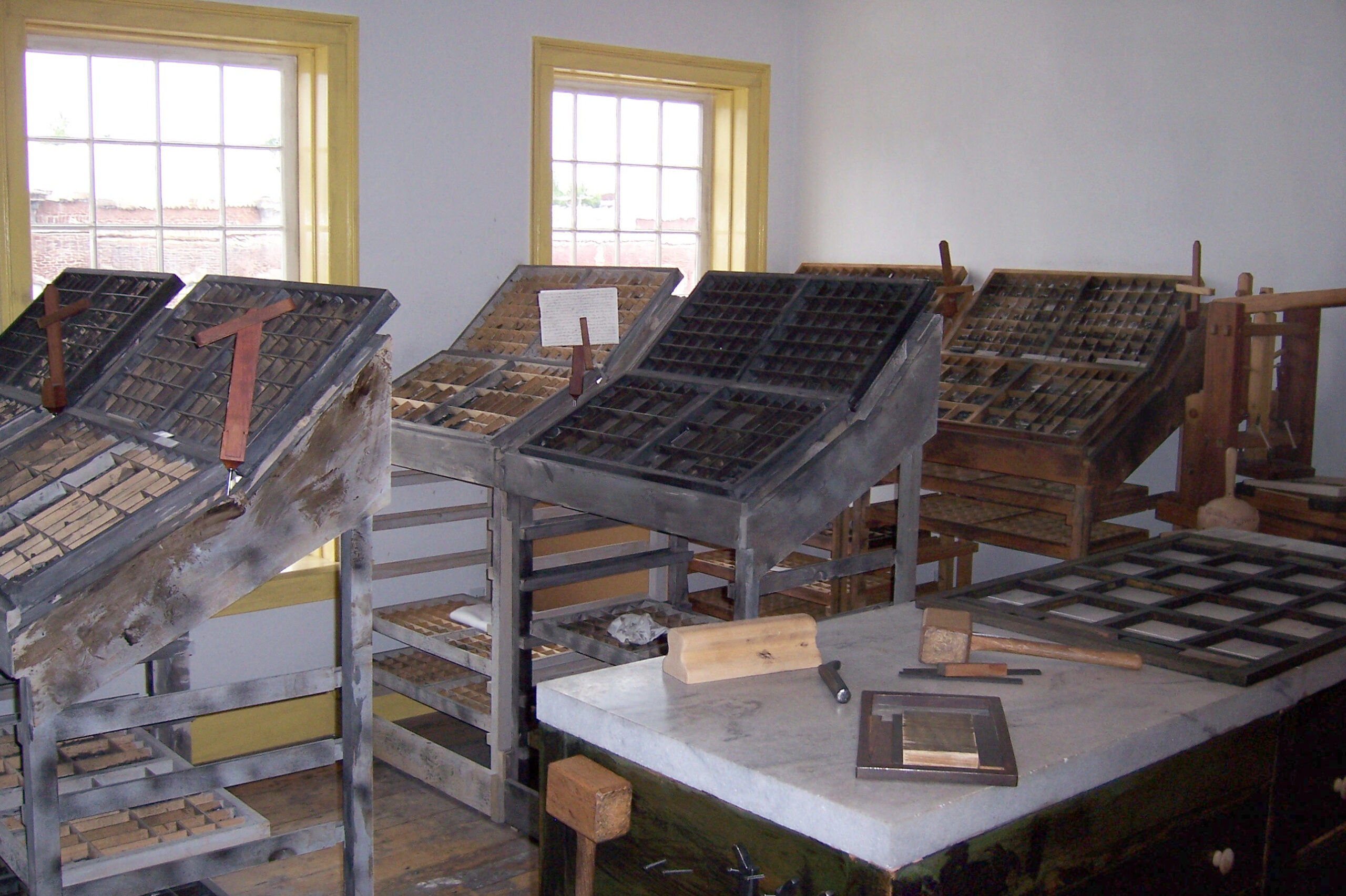
Printers did not usually build all the type for a book and leave it standing until the last copy was finished. Type was expensive, and a small office had a finite supply. After a batch of sheets had been printed, pieces could be distributed back into their compartments for reuse. The next pages depended partly on dismantling the last ones.
Grandin obtained additional type for the Book of Mormon. The press was a Smith Patent Improved iron handpress, the kind of machine that had made larger jobs more practical for smaller printing offices. Its advantage still depended on people. No motor fed the paper, and no button promised to finish five thousand copies while the staff went to lunch.
The printing-history study “From Gutenberg to Grandin” places this equipment in the changing trade of the 1820s. Iron presses, supplies, transport, and a growing market for print had made such a project possible in Palmyra. A functioning publishing business was already there when Joseph needed one.
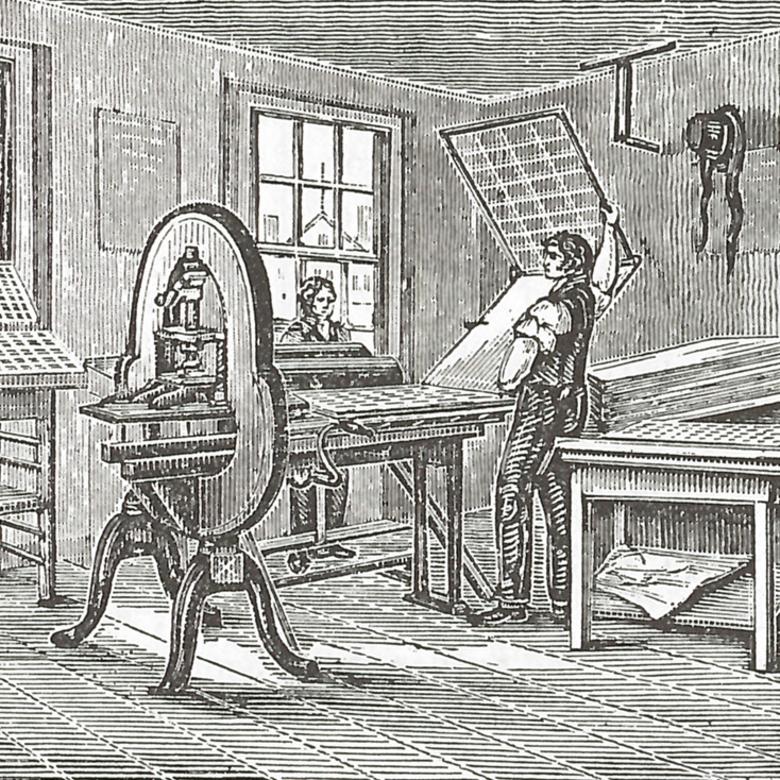
For each impression, ink had to be applied to the raised faces of the type. Grandin’s crew used ink balls. Paper was positioned, the bed moved into place beneath the press, pressure applied, and the printed sheet removed. The next sheet waited its turn. A clear page depended on ink, placement, pressure, and the condition of the type all cooperating.
The pages were arranged on the sheet for folding, not for easy reading while it lay flat. In Gilbert’s account, a sheet carried eight pages on each side. Once folded, it became a sixteen-page gathering, usually called a signature. The book contained thirty-seven such signatures. A reader saw a continuous story; the printer saw batches of pages that had to become continuous later.
That arrangement also explains why a mistaken page number or a changed letter could appear in only some copies. Correct the type during a run, keep the sheets already printed, and the binder later receives both versions. Nothing in the finished book announces exactly when a particular sheet left the press.
Janet Jenson’s study of seventy first-edition copies found forty-one points of variation and sixty different combinations among the books examined. These were variants within the same 1830 edition. A first edition is not necessarily five thousand identical objects.
The long autumn and winter
Most of the printing proceeded while Joseph was back in Harmony. Oliver, Hyrum, and Martin handled much of the supervision near the shop. The surviving letters help keep Joseph’s part in proportion: he remained involved, but he was not standing beside the press every working day.
Oliver’s December 28 letter described the publication work as occupying much of his time. He also reported his religious activity. The book had become a demanding daily responsibility, rather than an event waiting patiently for its place in a future history.
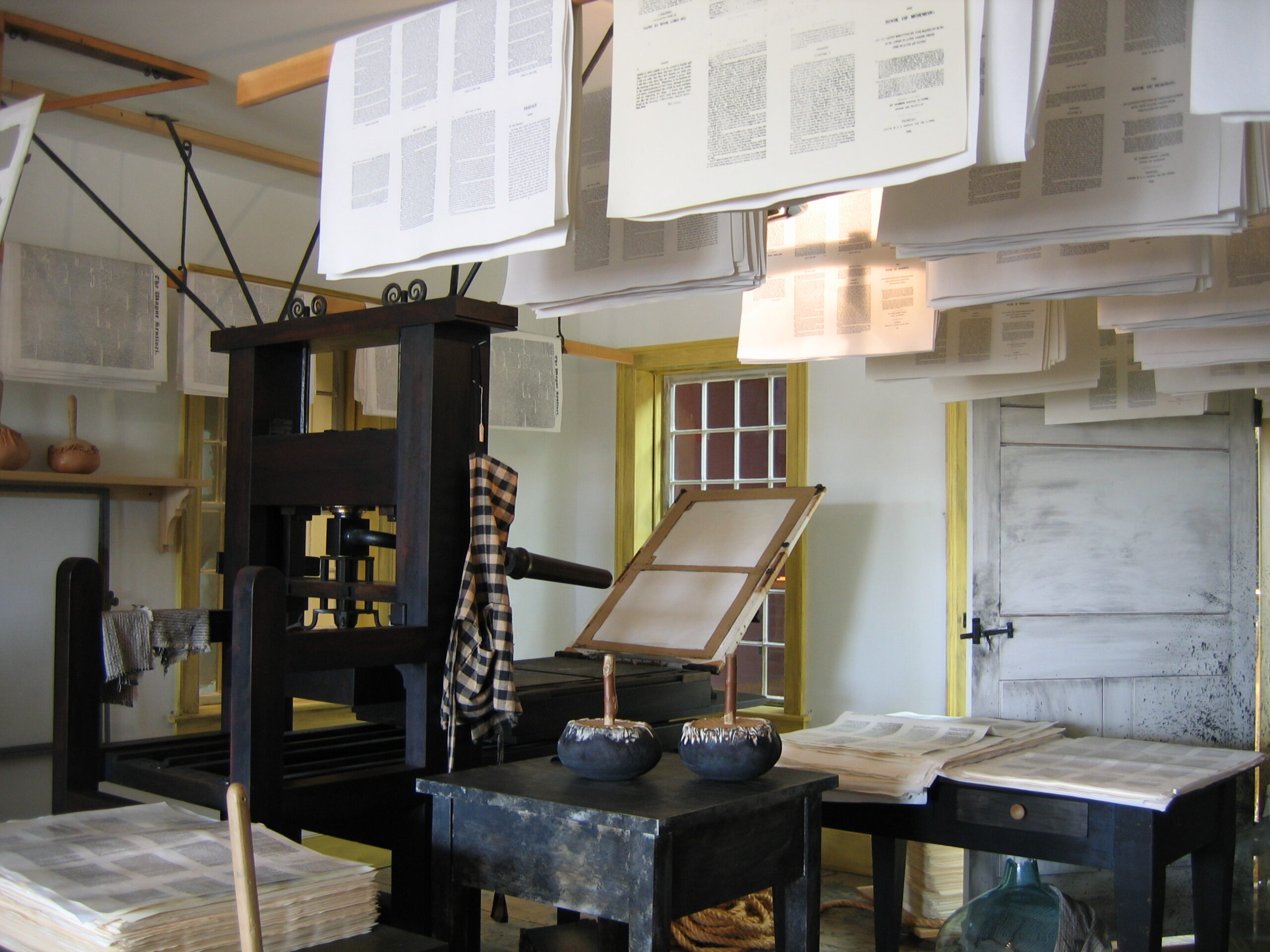
Gilbert recalled doing presswork with J. H. Bortles before another pressman, Thomas McAuley, joined the job in December. Such changes helped the work continue while the type still had to be composed and proofs checked. The names of extra hands matter because “Grandin printed the book” can otherwise leave us imagining one exceptionally busy man.
A newspaper office had other customers and regular obligations. The Book of Mormon was an immense job within an existing business. The press on which it was printed could also be used by someone else outside the main working hours. In the winter, that shared arrangement caused trouble no locked manuscript box could prevent.
January 1830: Abner Cole borrows more than a press
Abner Cole published the Reflector, a local newspaper whose commentary on the “Gold Bible” was anything but friendly. He wrote under the name Obadiah Dogberry. More inconveniently for Joseph and his associates, Cole used Grandin’s equipment at night and on Sundays. The forthcoming book was being made in a workplace he could enter.
In December, Cole announced that he intended to publish extracts. In January, he did. Portions of First Nephi appeared in the January 2 and January 13 issues, and an extract from Alma appeared on January 22. These were pieces of an unpublished book appearing under another editor’s control.
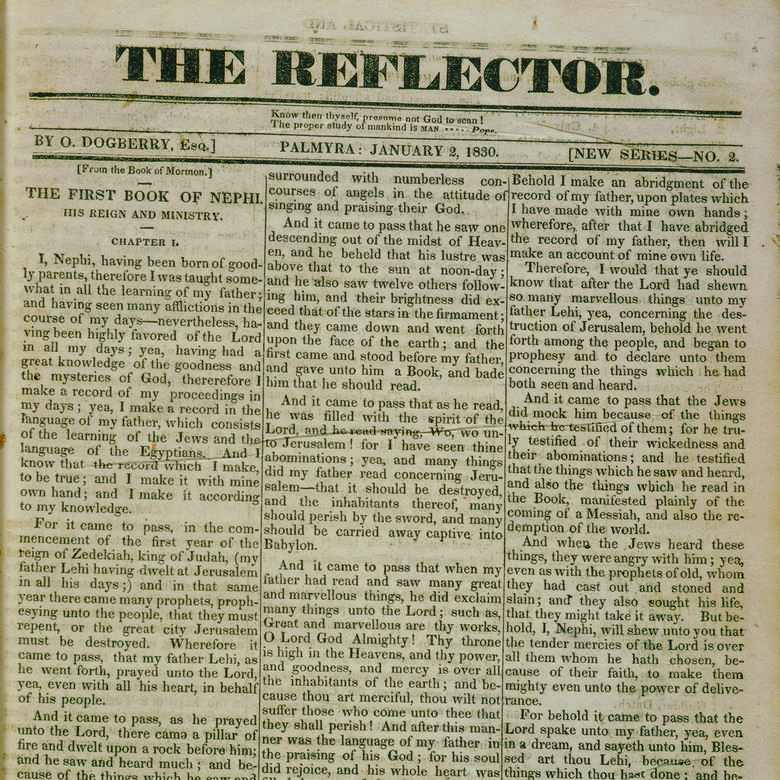
Lucy Mack Smith later described Hyrum and Oliver encountering Cole in the office and objecting. Cole refused to stop. Joseph was brought back from Pennsylvania and asserted his copyright. Lucy’s account supplies the confrontation; the surviving newspaper issues supply the printed excerpts. We can put those kinds of evidence together without pretending we have a verbatim transcript of the argument.
The Joseph Smith Papers’ discussion of Oliver’s December letter examines the chronology closely. The clash appears to belong to January, although its exact day is harder to establish. Cole stopped publishing extracts after the January 22 issue. He did not stop criticizing the book.
The episode exposed a weakness in the precautions. Two manuscripts could be kept apart and pages carried carefully, yet the printed text had to sit in a shop until it could become a book. Cole could get at work already done. Copyright, obtained months earlier, now had a purpose beyond a line in the front matter. LDS Flow’s earlier visit to the Grandin site takes a closer look at the Cole episode.
There was another awkward possibility in town: people could refuse to buy the finished volumes. Later accounts describe a threatened boycott and a pause in Grandin’s work while payment was reassured. The existence of the mortgage did not make everyone calm about a project that still depended on sales. Joseph and Martin had to keep the printer willing to continue.
January 1830: another agreement, then a journey north
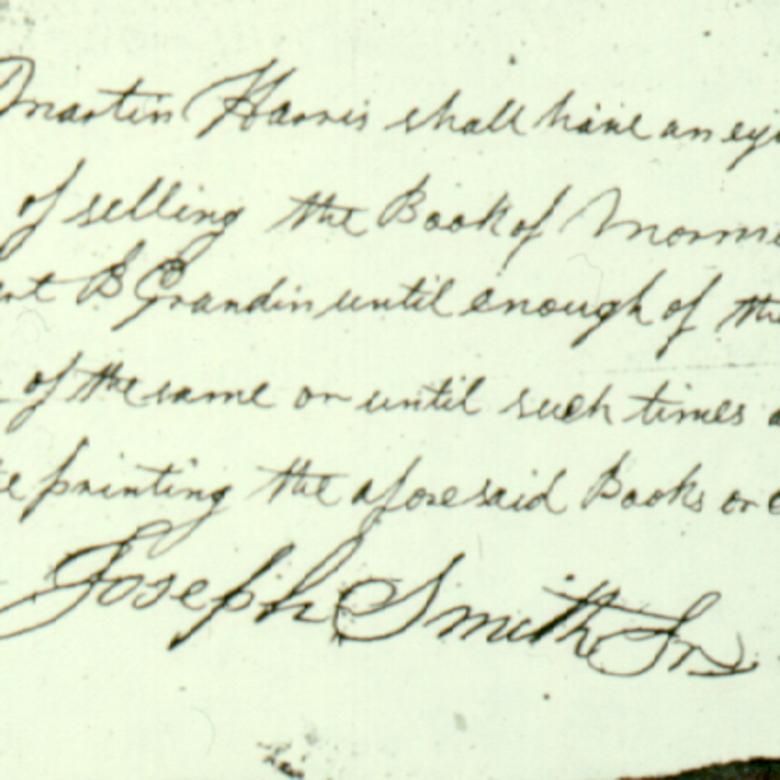
On January 16, Joseph signed an agreement giving Martin Harris an “equal privilege” with Joseph and his friends to sell copies until the printing obligation was met or Martin had been repaid. The document survives, with Joseph’s signature and Oliver’s witness signature.
There were also efforts to obtain money through publication rights in Canada. An early 1830 revelation directed Oliver Cowdery, Hiram Page, Josiah Stowell, and Joseph Knight Sr. toward Kingston, Upper Canada. The proposed sale concerned rights to publish in the Canadian provinces. It was not the sale of Martin’s New York farm, nor a completed transfer of the American copyright.
The journey did not secure the hoped-for result. The revelation’s wording made the proposed transaction conditional. The manuscript evidence and later recollections leave some details unresolved, including the precise travel dates. The failed effort belongs in the history of financing the book, even though it does not fit a tidy account in which every plan worked.
During part of the printing, the shop used the original manuscript rather than the printer’s copy. Scholars can identify that through the relationship between the manuscripts and the printed text. The Canadian journey may help explain why the copy was unavailable, but that connection remains an explanation of the evidence, not a documented daily log.
The practical task in Palmyra continued: keep enough copy available, keep the press moving, and produce books that could be sold. The separate efforts to raise money had not eliminated Martin’s obligation.
Luther Howard and the people downstairs
A printed sheet was still a long way from a book. Below the pressroom, Luther Howard’s bindery turned paper into something a customer could carry home. Sheets had to be folded, gathered in sequence, sewn, trimmed, and covered. The jobs were related, but finishing one did not finish the others.
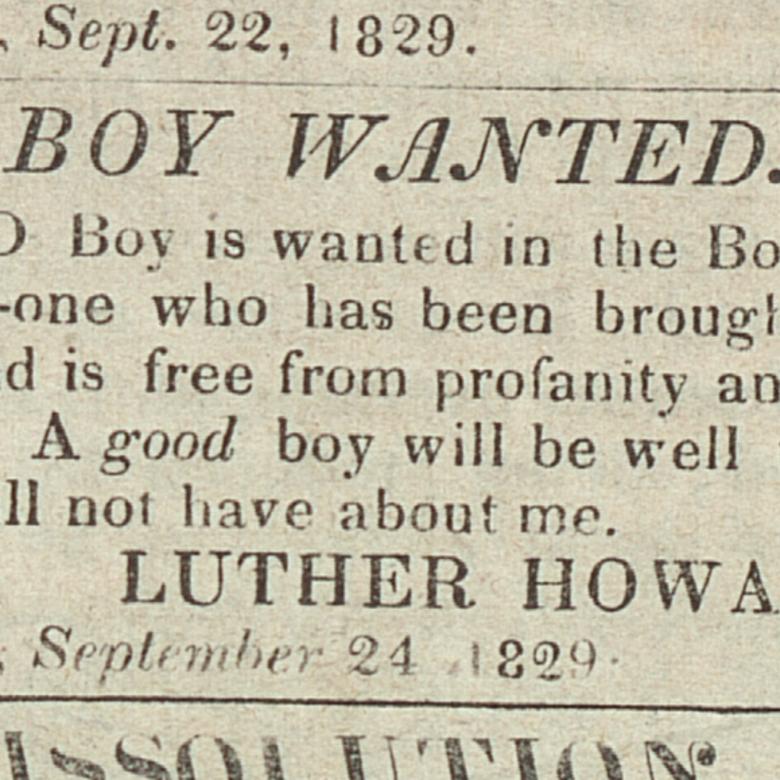
A short advertisement makes the bindery feel more immediate than any grand description of it. In the Wayne Sentinel, Howard wanted a boy for the business. The surviving clipping asks for good conduct as well as help. It is a reminder that an apprentice might learn the trade while doing work on a book whose future importance nobody in the room could measure.
Later accounts identify Albert Chandler among the bindery workers. He remembered helping gather and stitch the book. His contribution was a different kind of repetition from Gilbert’s: arranging sections correctly and joining them so that readers could move from Nephi to Moroni without discovering that part of the story had been left on another table.
The volumes were bound in brown calf leather, with a dark label and gilt lettering on the spine. Peter Crawley’s bibliographical description of the 1830 edition records the binding and front matter. It also explains why extra material found in some surviving copies should not automatically be treated as part of the original printing.
Open the book and the main numbered text runs through page 588. The leaves at the beginning and the witness statements at the end add to the physical book. This is why references to its total length can differ without describing different works: some count the numbered text, while others include the additional pages.
March 1830 brought the first copies ready for purchase, not a single moment when every binding on every book was suddenly finished. The Church’s Grandin exhibit describes binding the whole edition as work extending beyond a year. The bookstore could begin selling while the bindery continued assembling more volumes.
March 26, 1830: books for sale
On March 19, the Wayne Sentinel announced that the Book of Mormon would be ready during the following week. On March 26, it advertised the work for sale at the Palmyra Bookstore, wholesale and retail, by Howard and Grandin. At last, the prospective reader could buy an actual bound book.
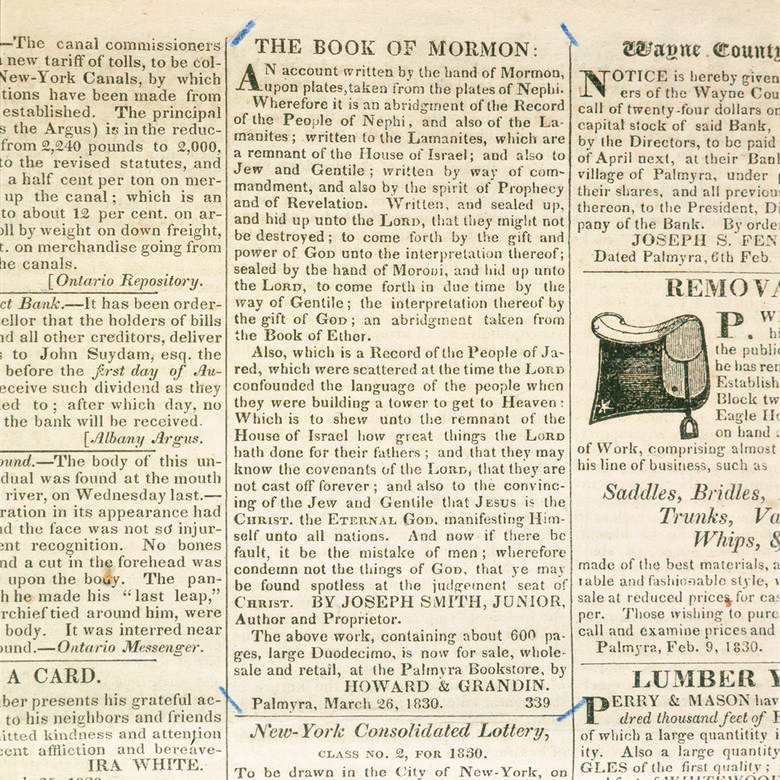
The new Church of Christ was organized on April 6, less than two weeks later. The book did not come from the publishing department of an established denomination. Its first copies were available before the Church’s founding meeting.
Martin tried to sell them. Local demand was disappointing. Joseph Knight Sr. later remembered encountering a distressed Martin, worried that purchasers were not coming forward. We should not give that recollection the precision of a sales ledger, but the surviving financial documents show that the problem persisted.
In February 1831, Joseph wrote to Martin from Ohio, asked him to bring the books, and instructed him not to sell them for less than ten shillings. In New York usage, that meant $1.25. The book was still inventory that needed to move, even as the Church itself was moving west.
Grandin had transferred the mortgage to Thomas Rogers II in October 1830. On April 7, 1831, the mortgaged property was sold to Thomas Lakey for $3,000, settling the printing obligation through the land Martin had pledged. Describing the outcome as an immediate loss of everything he owned goes beyond the record. Describing it as a cost-free promise misses the acres that changed hands.
A later report says Martin eventually recovered the money he advanced. The Joseph Smith Papers editors present that report cautiously. The contemporary transaction remains clear: his land supplied the financial security that let Grandin take the job, and the sale met the obligation when early book sales had not.
The book begins traveling before the last binding is finished
Some readers had encountered the text before March. Thomas B. Marsh obtained a proof sheet of the first sixteen pages during a visit to Palmyra and took it home. Oliver’s November letter already mentions correspondence from him. The encounter belongs in the autumn of 1829; it need not be pushed into a later month to make a neatly sequenced story.
Solomon Chamberlin received printed pages as well and carried news of the work into Canada. The book was beginning to travel in pieces. An unbound sheet could introduce its message while Howard’s workers were still making finished copies downstairs.
Once the Church was organized, Samuel Smith carried books into the towns around Palmyra. The Church History Museum follows one surviving copy into the Young family. Samuel’s early missionary work had discouraging days, but the volumes he placed with Phineas Young and the Greene family reached additional readers through relatives and friends.
Brigham Young did not read a copy and immediately become an Apostle. His investigation took time. That interval is worth keeping: a book could pass from one household to another, be read, discussed, questioned, and read again. A missionary’s first sales figures would have been a poor guide to where those particular copies might lead.
The printers made thousands of copies of a single text. Once the books left the counter, every copy could acquire its own route. A purchaser could lend it, a relative could take an interest, and a reader could meet someone who had never heard of Joseph Smith. The work upstairs was finished page by page; its movement outside the shop was much less orderly.
1837 and beyond: the papers that survived
The first edition was a beginning, not a permanent freeze of its typography. A second edition appeared in Kirtland in 1837. Its preface openly acknowledged printing errors and said Joseph Smith and Oliver Cowdery had compared the book with the manuscripts. The men who brought it into print also worked to correct its transmission into print.
Other changes eventually made the page familiar to modern readers. But the 1830 edition still lets us read without the later visual machinery of footnotes and verse divisions. The long paragraphs sometimes feel demanding. They also give room to follow a sermon or a narrative without stopping at every small numbered unit.
The manuscripts had very different futures. In 1841, the original was placed in the cornerstone of the Nauvoo House. Water damaged much of it; only about 28 percent survives. The printer’s manuscript was preserved through the Cowdery and Whitmer families and then by the Reorganized Church of Jesus Christ of Latter Day Saints, now Community of Christ.
In 2017, The Church of Jesus Christ of Latter-day Saints acquired the printer’s manuscript from Community of Christ, acknowledging the care that had preserved it. The copy made to protect the original is now the earliest surviving manuscript for most of the book’s text.
Those pages let researchers examine the process instead of guessing at it. The handwriting, printer’s marks, and surviving books can be compared. A comma supplied in Palmyra and a copying error made before it arrived can sometimes be separated. The papers were handled for a practical job in 1829; they remain useful because people kept them afterward.

A book you could carry home
For Latter-day Saints, the Book of Mormon’s purpose is larger than its publishing history: it invites readers to come unto Jesus Christ. The opening title page placed that witness before the first purchasers, too. Yet holding the first edition makes the physical effort behind that invitation difficult to miss.
Martin’s signature put land at risk. Oliver filled another manuscript. Hyrum carried pages. Gilbert built lines of type and decided where a reader should pause. Pressmen made impressions, and bindery workers stitched the sheets into books. Some believed the record was scripture. Others supplied honest trade work for a customer.
On March 26, 1830, a person could enter the Palmyra Bookstore and leave with a copy. The text that had moved between guarded manuscripts and crowded worktables could now travel in a reader’s hands. The next person to open it did not need to know how a compositor’s stick worked. Someone in Grandin’s shop had already done that part.
Sources and further reading
The documents below let you follow the production through contemporary letters, legal agreements, manuscripts, and the first edition itself. Later recollections are identified as such in the story. The museum and scholarly studies help explain the equipment and compare those memories with surviving objects.
Read the original documents
- Book of Mormon, 1830 edition, Joseph Smith Papers. Digitized pages, binding description, original chapter divisions, preface, and witness statements.
- The 1830 preface. Joseph Smith’s published explanation of the lost manuscript.
- Copyright for Book of Mormon, June 11, 1829. Original certificate and an editorial introduction to the negotiations and copyright process.
- Printer’s manuscript, circa August 1829–circa January 1830. Facsimiles, transcription, handwriting analysis, and printer’s marks.
- Oliver Cowdery to Joseph Smith, November 6, 1829. Printing progress, anticipated completion, faith, and health; the postscript is on the third page.
- Oliver Cowdery to Joseph Smith, December 28, 1829. The publication work and a useful editorial examination of the chronology of the Cole confrontation.
- Agreement with Martin Harris, January 16, 1830. Rights to sell copies and recover the printing investment.
- Revelation, circa summer 1829, now Doctrine and Covenants 19. The financial setting and the editors’ discussion of the dating.
- Revelation, circa early 1830. The proposed Canadian copyright transaction and evidence about the journey.
- Joseph Smith to Martin Harris, February 22, 1831. The remaining books, the move to Ohio, and the minimum sale price.
- Preface to the 1837 edition. The printers’ explanation of comparison with manuscripts and correction of errors.
The shop, people, and surviving books
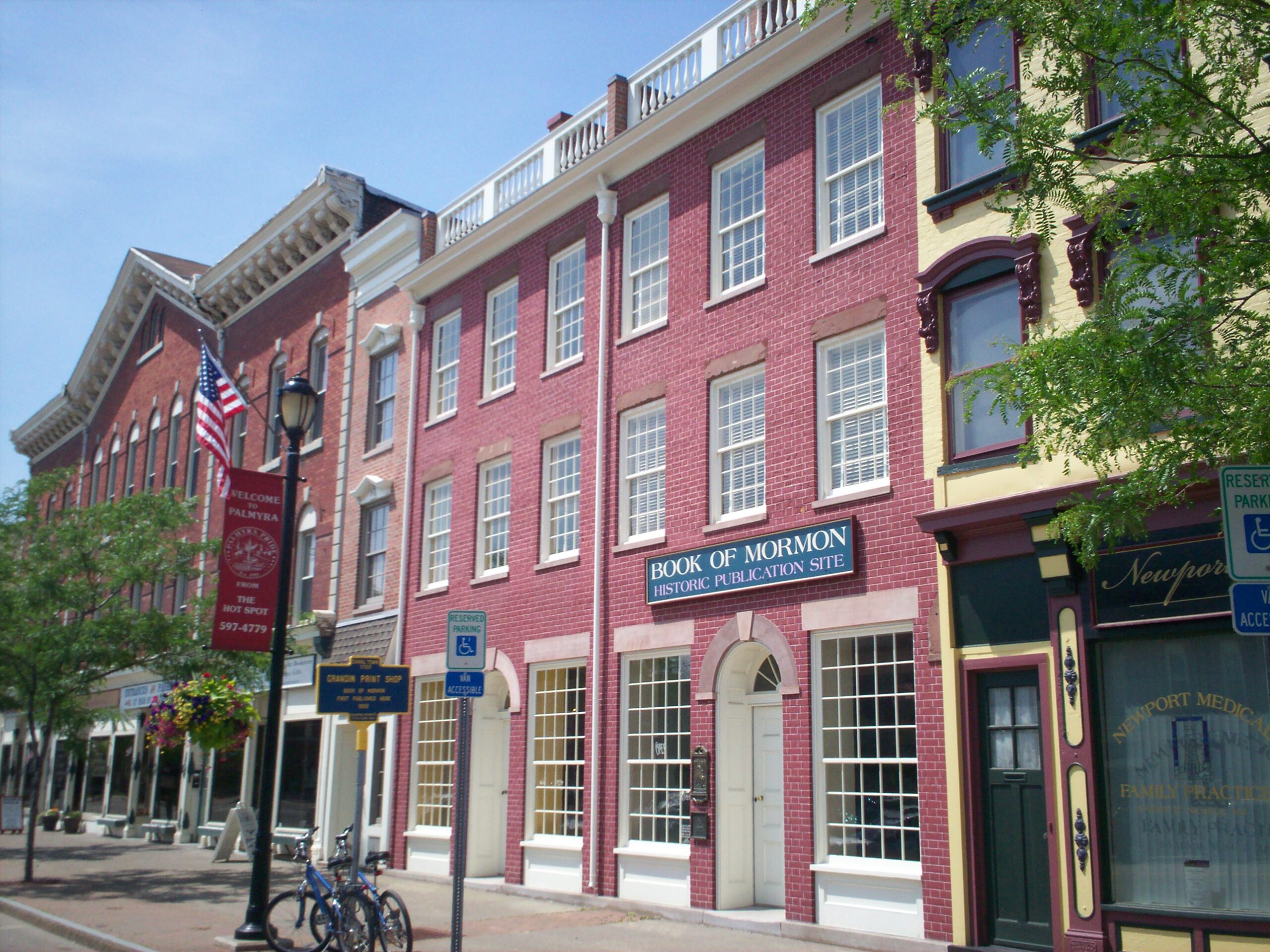
- The Grandin Building: Book of Mormon Publication Site, Church History Department. Historical portraits, newspaper clippings, tools, and explanations of the restored setting.
- Egbert Bratt Grandin and John H. Gilbert, Joseph Smith Papers biographical entries.
- The Grandin Press: A Vital Tool of the Restoration, Church History Museum. The surviving Smith Patent Improved Press and its operation.
- The Book of Mormon from Manuscript to Press, Church History Museum. Manuscript protection, punctuation, and corrections.
- Royal Skousen, “Worthy of Another Look: John Gilbert’s 1892 Account of the 1830 Printing of the Book of Mormon” (2012). A scholarly assessment of Gilbert’s late-life account.
- Janet Jenson, “Variations between Copies of the First Edition of the Book of Mormon” (1973). Research on printing variants within the 1830 edition.
- “From Gutenberg to Grandin”, BYU Religious Studies Center. The handpress and the printing industry that made the Palmyra job possible.
- Peter Crawley, A Descriptive Bibliography of the Mormon Church, volume 1, entry 1. First-edition binding and publication details. Some identifications and dating in this older work have been superseded by the manuscript research cited above.
- Larry C. Porter, “The Book of Mormon: Historical Setting for Its Translation and Publication”. Printing and bindery personnel, early circulation, and source references.
- Samuel Smith: Missionary to Prophets, Church History Museum. A surviving first-edition copy and its route through the Young family.
- Church acquires the printer’s manuscript, September 20, 2017. The transfer from Community of Christ and acknowledgment of its stewardship.
Related reading on LDS Flow: The Lost 116 Pages and The Stolen Book of Mormon Pages: What I Learned at the Grandin Printing Press.