 LDS Flow A comprehensive online experience for members of The Church of Jesus Christ of Latter-day Saints.
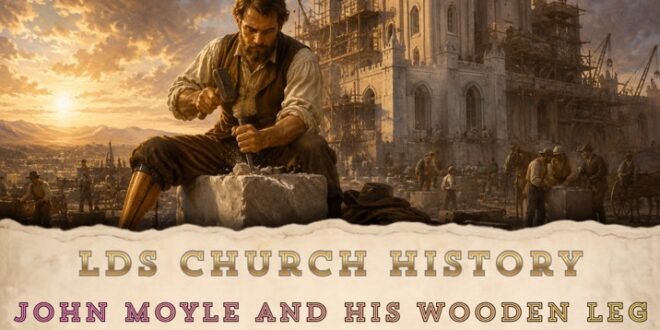
He Lost His Leg—Then Walked 22 Miles Back to Help Build the Salt Lake Temple
John Rowe Moyle had already crossed an ocean, pulled a handcart across the American plains, established a farm on the Utah frontier, and spent years helping raise one of the most ambitious buildings in the American West when an ordinary farm accident threatened to end his working life. A cow kicked him with enough force to cause a devastating compound fracture below the knee. In the medical conditions of pioneer Utah, the damaged leg could not be saved. According to the family account later repeated by Church leaders, Moyle was strapped to a door while family and friends amputated the leg with a bucksaw. For most men in the nineteenth century, particularly a man whose livelihood depended upon physical labor, that could easily have marked the end of the story.
For John Rowe Moyle, it did not.
As the wound healed, the accomplished stoneworker fashioned an artificial leg for himself. Church accounts describe an ingenious wooden prosthesis with a joint that functioned as an ankle. Moyle began slowly, first learning to move around his home, then around the yard and eventually across his property. Walking on the device was painful, but he continued building his endurance until he could once again make the extraordinary journey for which he had already become known: the roughly 22-mile trip from his home in Alpine to Salt Lake City, where he worked as a stonecutter on the Salt Lake Temple.
Eventually, Moyle returned to the scaffolding and granite. Among the work traditionally and officially attributed to his hands are four words that remain among the most recognizable inscriptions on any Latter-day Saint temple:
HOLINESS TO THE LORD
Those words still stand on the east center tower of the Salt Lake Temple. In 2025, as preservation specialists restored and reapplied gold leaf to that very panel, the Church again publicly identified John Rowe Moyle as the stonecutter who had engraved it. Moyle himself, however, never saw the finished temple. He died in 1889, four years before President Wilford Woodruff dedicated the building in April 1893.
His story is remarkable not because a pioneer once endured a terrible accident, but because of what he chose to do afterward.
From Cornwall to the Restored Gospel
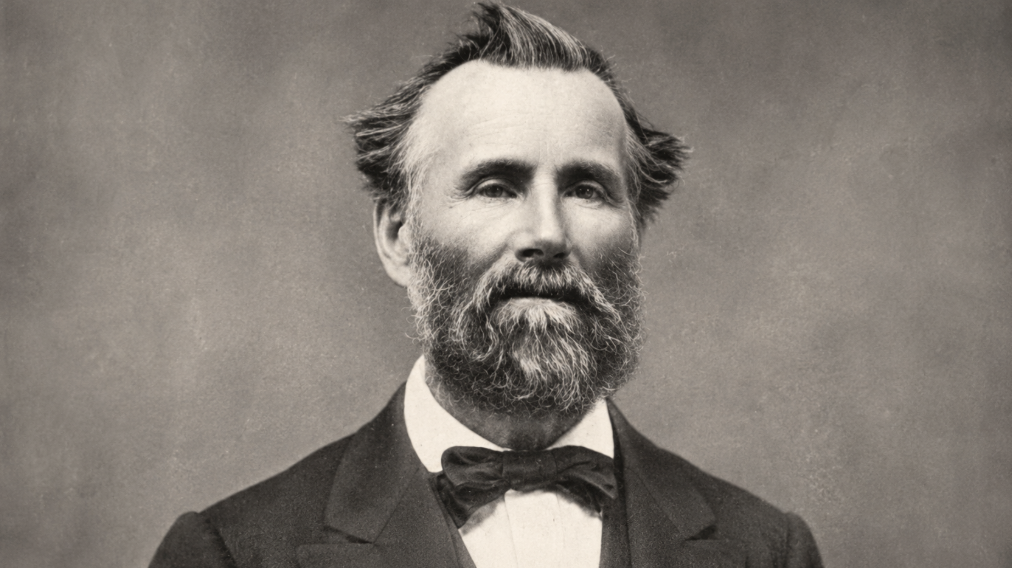
John Rowe Moyle was born on February 22, 1808. He grew up in England and became a skilled stonemason, learning a trade that would eventually connect his name permanently with the Salt Lake Temple. Later histories report that John and his wife, Phillippa Beer Moyle, joined The Church of Jesus Christ of Latter-day Saints in England in 1851. Like thousands of British converts during that period, the Moyles eventually decided to leave their homeland and gather with the main body of the Saints in the American West.
Their emigration placed them directly into one of the most important experiments in Latter-day Saint pioneer history. In 1856, John, Phillippa and their children joined the Edmund Ellsworth Company, the first organized Latter-day Saint handcart company to cross the plains to Utah. The Church History Biographical Database places 48-year-old John Rowe Moyle in the company alongside his wife and five of their children. The company formed at Iowa City on June 9, 1856, and arrived in Salt Lake City on September 26.
The Ellsworth company contained more than 300 documented participants and demonstrated that emigrants without the resources to purchase wagons and large teams could make the western journey with handcarts. Their experience should not be confused with the catastrophic Willie and Martin companies that were trapped by winter later that same year. Ellsworth’s company departed earlier, traveled rapidly and successfully reached Salt Lake City before the devastating October storms descended upon the later emigrants.
Even so, crossing the continent with a handcart was hardly an easy beginning to life in Utah. Moyle had left England as a middle-aged craftsman with a family and arrived in a frontier territory where nearly everything still had to be built. The skills he had learned years earlier as a stoneworker would soon become enormously valuable.
The Temple That Took Forty Years to Build
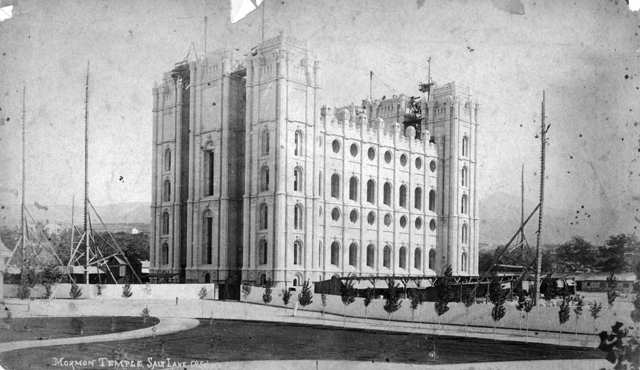
The Salt Lake Temple was already under construction when the Moyle family reached Utah. Brigham Young had announced the temple site in 1847, only days after the first Latter-day Saint pioneer wagons entered the Salt Lake Valley, and ground was formally broken on February 14, 1853. The project would become one of the defining undertakings of the pioneer generation.
The scale of the construction is difficult to appreciate today. The Saints eventually chose granite quarried in Little Cottonwood Canyon, roughly 20 miles from the temple site. Before rail transportation simplified the process, enormous granite blocks had to be hauled by teams over primitive roads. Church history records describe the repeated sound of chisels striking stone as one of the characteristic noises surrounding Temple Square as craftsmen slowly shaped the massive building.
Progress was painfully slow. Problems with the original foundation forced portions of the early work to be removed and rebuilt. Economic hardship, weather, the Utah War, shortages of labor and materials, and later conflicts between the federal government and the Church all contributed to delays. Construction began in 1853, but the temple would not be dedicated until April 6, 1893—exactly forty years after its cornerstones were laid.
Thousands of Saints contributed money, food, animals, labor and specialized craftsmanship during those decades. Moyle became one of those builders.
A 2 A.M. Walk to Work
Moyle eventually settled with his family in Alpine, Utah, south of Salt Lake City. Church accounts describe the distance between his home and the temple construction site as approximately 22 miles, and Moyle’s weekly schedule has become almost as famous as the wooden leg he later made.
On Monday mornings, he reportedly left Alpine at about 2:00 a.m. so that he could reach the temple site in time for work. The trip took approximately six hours. He remained in Salt Lake City during the workweek and finished on Friday afternoon, after which he began the long walk back to Alpine, often arriving close to midnight. Church retellings say he repeated the routine year after year.
There was a practical reason for walking. A horse on a pioneer farm was not simply a convenient vehicle waiting in the driveway. It was an essential agricultural asset needed by the family. Later accounts say Moyle left the family’s horse at home where it could be used for farm work and made the journey under his own power instead.
The image is difficult to shake: a middle-aged pioneer leaving his farm in darkness at two o’clock on Monday morning and walking for hours toward Salt Lake City, spending the week cutting stone, then making the same journey home on Friday night so that he could work his own property and spend the weekend with his family.
Then on Monday, he did it again.
This continued for years.
Building the Salt Lake Temple Was Brutal Work
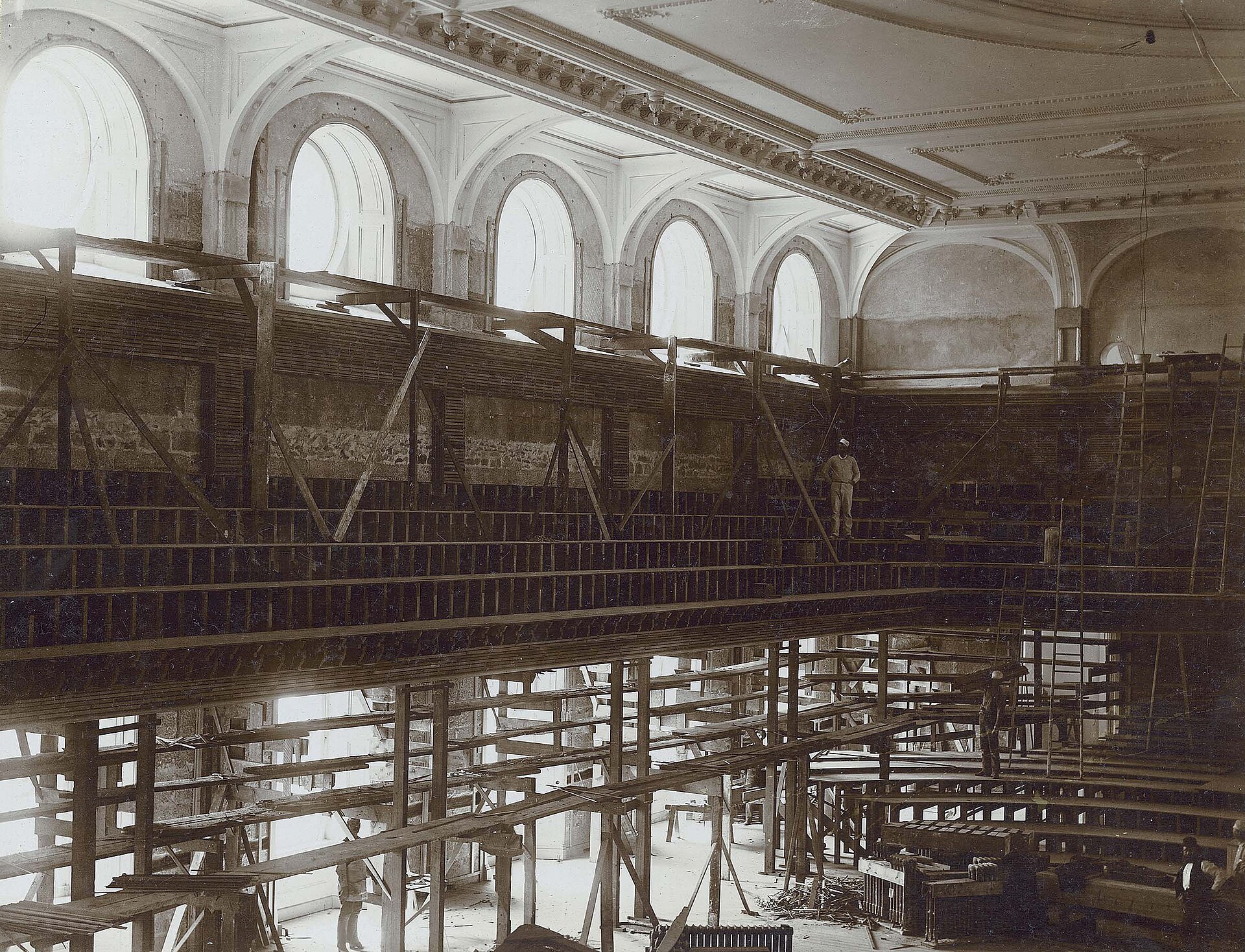
Moyle’s commute was only the beginning of the physical challenge. Stonecutting in the nineteenth century was exhausting skilled labor. The Salt Lake Temple was being built from enormous granite blocks, and the ornate exterior required craftsmen capable not simply of moving stone but of shaping, finishing and carving it with remarkable precision.
The temple itself was enormous by frontier standards. Its walls were approximately nine feet thick at the base, and its six towers slowly rose above a city that, when construction began, had existed for only a few years. The building became a visible statement of what the Saints intended their settlement in the Great Basin to become.
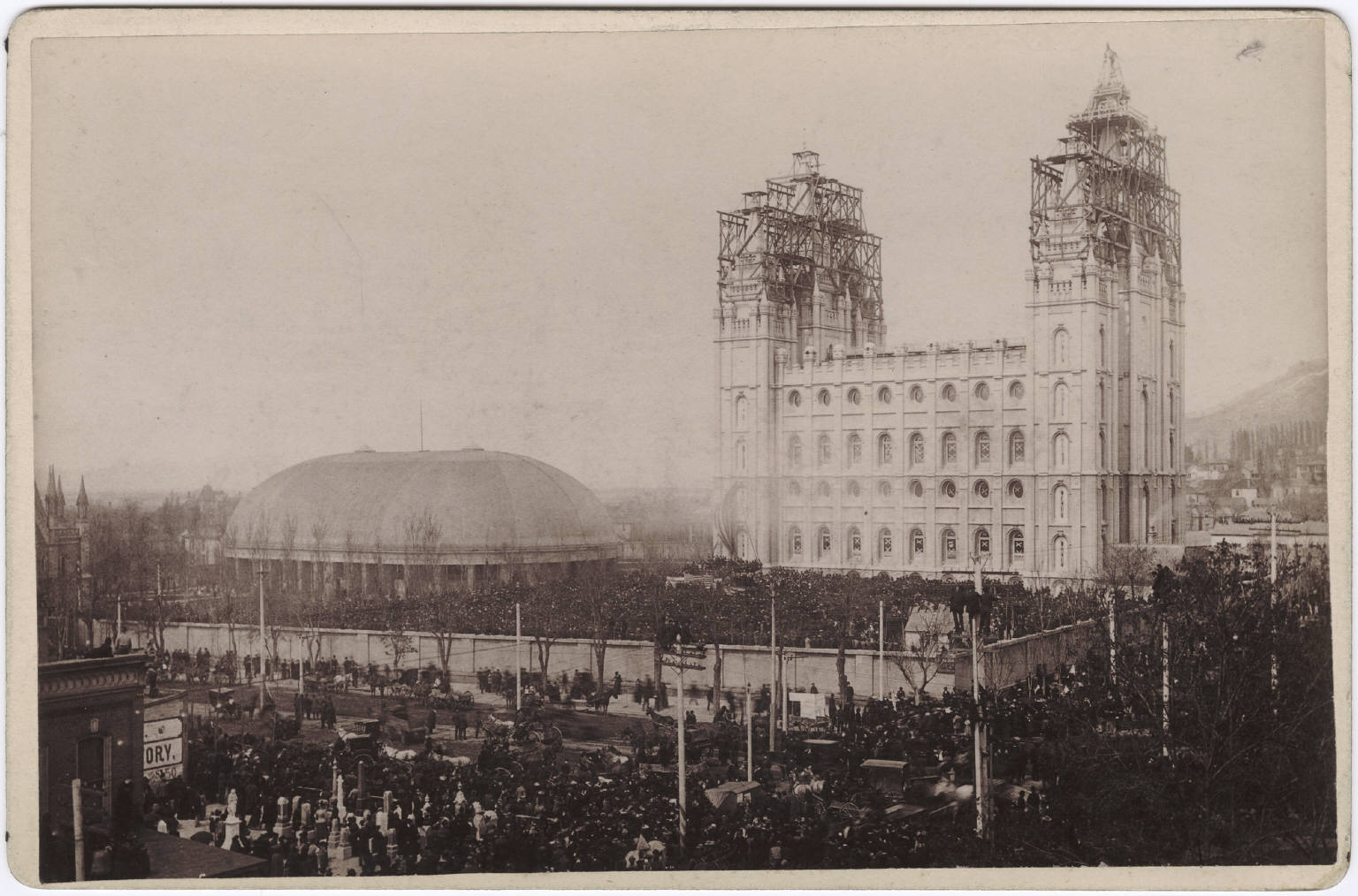
Moyle’s exact supervisory title has sometimes been described differently in later retellings, so it is safest to describe him simply as what the strongest sources establish: an accomplished stonecutter who spent years working on the Salt Lake Temple. His craftsmanship became important enough that his name survived when most individual laborers on the forty-year project faded from public memory.
Then came the accident that should have ended his work.
A Cow Shattered His Leg
While Moyle was home tending his farm, one of his cows kicked him and caused a severe compound fracture below the knee. Modern medicine might have offered reconstructive surgery, antibiotics, sterile operating facilities, sophisticated pain management and months of rehabilitation. None of those options were available on an isolated Utah farm in the nineteenth century.
The dramatic details most often told today come from Moyle family tradition and were later quoted by Church leaders, including Elder Jeffrey R. Holland and President Dieter F. Uchtdorf. According to that account, Moyle’s family and friends removed a door from its hinges and used it as an improvised operating table. With no adequate surgical care available, they amputated the lower portion of the damaged leg using a bucksaw.
It is important to identify that portion of the story properly. We do not possess a modern medical record or a contemporaneous surgical report describing every moment of the operation. The detailed scene comes through later family recollection. What is not seriously in dispute, however, is the essential fact behind it: Moyle lost part of his leg following the accident and survived.
Survival alone was an accomplishment. Amputation during that era carried enormous risks from blood loss, shock and infection. Moyle was also a working farmer and stonecutter whose life depended upon mobility and physical strength. Losing a leg could have reasonably ended his involvement in temple construction permanently.
Instead, the craftsman who had spent his life shaping stone turned his attention to another material.
He began shaping wood.
Moyle Built His Own Leg
Moyle fashioned an artificial leg for himself. President Dieter F. Uchtdorf’s 2008 General Conference account describes the prosthesis as having an “ingenious joint” that served as an ankle for the artificial foot. The surviving object has also been associated with the collections of the Daughters of Utah Pioneers, providing a tangible reminder that the wooden leg was not merely a metaphor added to the story generations later.
Learning to use it was another matter.
Church accounts describe Moyle beginning inside his home, gradually progressing to the yard and then walking farther around his property as his strength increased. The device was painful, but he continued practicing until he believed he could endure the journey back to Salt Lake City.
President Uchtdorf later used Moyle as an example of quiet faithfulness, observing that “John did not do this for the praise of man.” The line captures something important about the story. There was no audience watching Moyle practice walking around his farm. No one could guarantee that he would ever return to the temple site, and no one would have reasonably condemned an aging amputee for deciding that he had already sacrificed enough.
Yet eventually Moyle strapped on the leg he had made and set out again.
Walking Back to the Temple
The most powerful part of the Moyle story is not the amputation itself. It is the journey afterward.
After building enough strength to tolerate the prosthesis, Moyle resumed the trip from Alpine toward Salt Lake City. The same man who had previously walked that route on two healthy legs was now attempting it on an artificial limb fashioned with nineteenth-century tools and materials.
Church accounts say he again covered the roughly 22-mile journey and returned to work on the Salt Lake Temple. Elder Holland’s retelling describes Moyle reaching Temple Square, climbing the scaffolding and again taking up his chisel.
There is an understandable temptation to turn this into a pioneer superhero story, but Moyle becomes more impressive when we resist exaggeration. He was not immune to pain. Church accounts specifically emphasize that walking on the artificial leg hurt. He was not young; he had been 48 years old when he crossed the plains in 1856, and much of his temple work occurred later in life. Nothing about the circumstances made returning easy.
He simply returned anyway.
“Holiness to the Lord”
High on the east side of the Salt Lake Temple stands the inscription that ultimately made John Rowe Moyle famous. The words come from scripture and have become closely associated with Latter-day Saint temples:
HOLINESS TO THE LORD
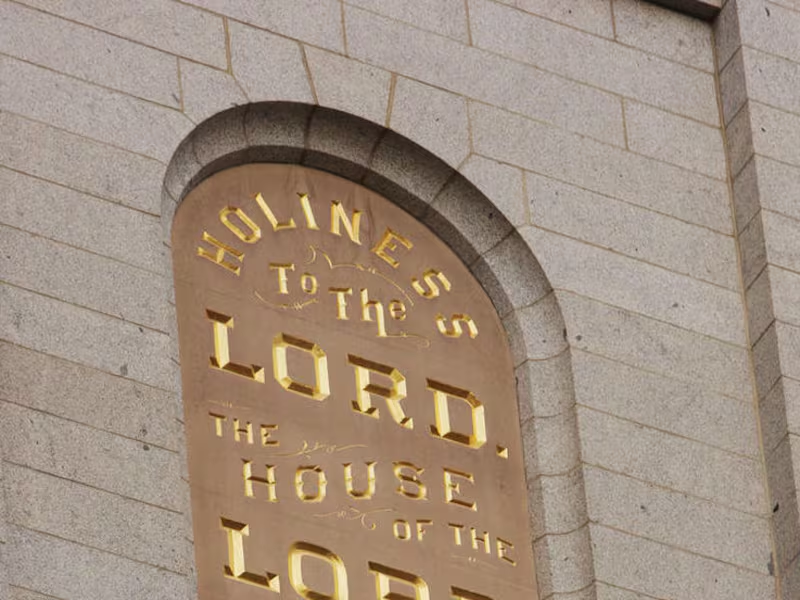
Moyle is credited with carving the inscription on the temple’s east center tower. This is not merely a century-old folk tradition that disappeared into pioneer legend. Official Church publications repeatedly identify Moyle as the craftsman responsible, and the connection was reaffirmed during the modern preservation of the Salt Lake Temple.
In August 2025, Church Newsroom reported on restoration work to the “Holiness to the Lord” panel. Conservator Eva Domenech was tasked with applying gold leaf to the restored inscription and said learning about Moyle’s story profoundly changed how she viewed the assignment. She was working on the same stone that the pioneer craftsman had engraved more than a century earlier.
That creates an extraordinary connection across generations. Moyle could never have imagined modern seismic engineering, cranes surrounding Temple Square, digital architectural models or preservation specialists applying new gold leaf to his carving. Yet the marks of his chisel survived long enough for another generation of craftsmen to carefully preserve them.
The stone outlived the stonecutter.
He Never Saw the Temple Finished
There is one final detail that makes Moyle’s devotion particularly meaningful.
John Rowe Moyle died on February 15, 1889, according to the Church History Biographical Database. The Salt Lake Temple was not dedicated until April 6, 1893.
He missed its completion by more than four years.
For decades the temple had risen slowly above Salt Lake City, and Moyle had sacrificed a remarkable portion of his life helping build it. He had crossed the plains as a handcart pioneer, walked between Alpine and Salt Lake City, cut granite, endured an accident that cost him a leg, built an artificial limb and returned to the work. Yet he never walked into the completed building he had helped create.
There is something almost perfectly pioneer about that.
The Salt Lake Temple was never the achievement of one man. Brigham Young did not live to see it dedicated either. Neither did many of the laborers who quarried its granite, drove teams, raised money, cut stone or contributed years of their lives to the project. They were constructing something intentionally larger than themselves and, in many cases, something whose completion they could only hope another generation would witness.
Moyle’s inscription is particularly appropriate because of that context. The building did not bear his name. His carving did not say John Rowe Moyle was here. The message he left in granite directed attention elsewhere:
HOLINESS TO THE LORD.
A Pioneer Who Had Already Walked a Long Way
There is another reason Moyle’s final years deserve perspective. Walking back to Salt Lake City on a wooden leg was not the first great journey of his life. Decades earlier, at age 48, he had crossed much of the continent with the first Latter-day Saint handcart company.
The Edmund Ellsworth Company left Iowa City on June 9, 1856. The Church History database identifies 328 participants and records the company’s arrival in Salt Lake City on September 26. Even through difficult mountain terrain near the end of the journey, the company sometimes averaged more than 20 miles in a day. When they finally entered the Salt Lake Valley, Brigham Young and other Church leaders came out to meet them.
John and Phillippa Moyle had therefore already demonstrated an extraordinary willingness to walk for their faith long before the Salt Lake Temple became the defining work of John’s life.
The handcart brought him to Utah.
His feet carried him from Alpine to the temple.
When one of those legs was gone, he built another and kept moving.
Separating the History From the Legend
Moyle’s story has been told repeatedly in Latter-day Saint culture, including in General Conference, Church magazines, historical articles and the short film Only a Stonecutter. Like many pioneer stories repeated across generations, a few details have occasionally shifted or been enlarged in later retellings. That is why it is useful to distinguish the exceptionally well-supported core of the story from details that come principally through family memory.
Church historical records establish Moyle’s birth and death dates and his membership in the Edmund Ellsworth handcart company. Multiple Church sources identify him as a Salt Lake Temple stoneworker, recount his long walk from Alpine, describe his amputation and wooden prosthesis, and credit him with carving the east-tower inscription. Deseret News historical features document the Moyle homestead in Alpine and the continuing local tradition surrounding his work. The Church’s own 2025 account of the inscription’s restoration again identifies him with the carving.
The vivid story of the door, bucksaw and circumstances immediately surrounding the amputation comes through later Moyle family tradition. That does not make the story meaningless or necessarily false, but good history should tell readers what kind of evidence they are reading.
Fortunately, the John Rowe Moyle story does not need embellishment.
The documented version is already extraordinary.
The Legacy at Moyle Park
Part of Moyle’s physical world still survives in Alpine. His former property is preserved as Moyle Historical Park, where visitors can see historic structures associated with the family. Deseret News has documented the property, including Moyle’s stone home, an unusual small defensive tower, a monument to Moyle and his burial place in Alpine Cemetery.
The site offers an important counterpart to the magnificent Salt Lake Temple. One end of Moyle’s weekly journey was an enormous granite temple being raised in the heart of Utah’s largest settlement. The other was a frontier farm where livestock still needed tending, crops still required attention and a family still depended upon the man who left in darkness every Monday morning.
Understanding both places makes the story more human. Moyle was not a full-time legendary figure walking endlessly toward a temple. He was a husband, father, farmer, immigrant, convert and tradesman attempting to meet competing obligations to his family, his livelihood and his faith.
The sacrifice mattered precisely because ordinary life continued around it.
Why John Rowe Moyle’s Story Still Matters
President Uchtdorf used Moyle’s life to teach about serving faithfully wherever we happen to stand. That may ultimately be the most useful way to remember him. His legacy is not simply that a pioneer could tolerate more pain than a modern person. Pioneer suffering is not valuable merely because it was suffering.
What matters is what Moyle believed the work was worth.
He had already contributed years of labor to the temple. Losing his leg gave him every reasonable justification to stop. Nobody could have accused him of laziness. Nobody could say he had failed to sacrifice. He had crossed the plains, established a pioneer home, raised a family, farmed Utah soil and worked on a construction project that seemed to stretch endlessly into the future.
Yet the building was unfinished, and Moyle still believed he had something he could contribute.
So he carved a leg.
He learned to use it.
And he went back to work.
Today millions of people recognize the Salt Lake Temple even if they have never heard the name John Rowe Moyle. That may be strangely fitting. The building was never supposed to be a monument to him. His most famous work directs the visitor not toward the craftsman but toward God.
More than a century after Moyle’s death, preservation specialists still carefully maintain the granite he helped shape. Above them remain the words associated with his hands and with the purpose he believed all those miles, all that stone and all that sacrifice were ultimately serving:
HOLINESS TO THE LORD.


The detail that stays with me is that Moyle made his own wooden prosthesis and slowly rebuilt his strength instead of treating pain as the end of his service. His example also reminds me that discipleship can include patient, practical work long before anyone sees the finished result.
The detail that stays with me is that Moyle first learned to use the wooden leg “around his home, then around the yard and eventually across his property.” It makes perseverance feel less like one dramatic moment and more like a series of small, painful acts of faith. I wonder how many people in our own lives are doing something similar quietly, building strength a little at a time.