 LDS Flow A comprehensive online experience for members of The Church of Jesus Christ of Latter-day Saints.
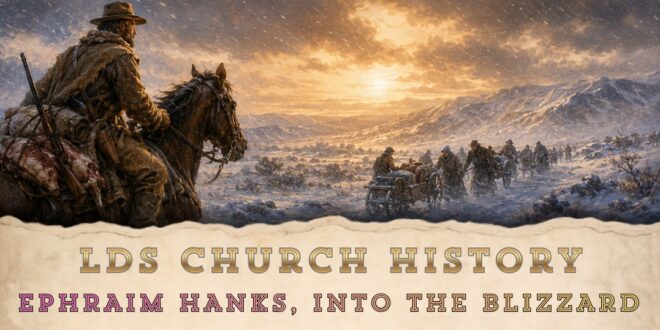
Into the Blizzard: Ephraim Hanks, the LDS Frontiersman Who Rode Into a Frozen Wilderness to Save the Handcart Pioneers
The story of Ephraim Knowlton Hanks and the 1856 handcart rescue is one of those episodes in Latter-day Saint history that hardly needs embellishment. Hundreds of men, women, and children were stranded on the plains of what is now Wyoming as an early and devastating winter descended upon them. Food had dwindled to starvation rations, clothing was inadequate for the conditions, frostbite was destroying hands and feet, and exhausted pioneers were dying along the trail. Hundreds of miles away in Utah, Church leaders began organizing an enormous rescue operation, and among the men who answered the call was a 30-year-old Mormon Battalion veteran and experienced frontiersman named Ephraim Knowlton Hanks.
Hanks would later say that before he understood the full extent of the disaster, he experienced something he regarded as a direct spiritual warning. During the night, he recalled being awakened by a voice telling him, “The hand-cart people are in trouble and you are wanted; will you go and help them?” The account was recorded years after the rescue, so it should properly be described as Hanks’s recollection and testimony rather than a contemporary diary entry, but it remains an important part of how he understood what happened. The Church preserves the account in its historical and general conference material, including Bishop W. Christopher Waddell’s 2023 address, “More Than a Hero.”
When another call for rescuers was made in Salt Lake City, Hanks did not ask for several days to gather equipment or decide whether he could manage the journey. According to his later account, he immediately announced, “I am ready now!” He then headed east toward the stranded pioneers. What followed included travel through severe snow, the abandonment of his wagon when conditions made further wagon travel impossible, a remarkable encounter with buffalo at a moment when starving pioneers desperately needed meat, primitive treatment of terrible frostbite, priesthood administrations among the suffering, and his eventual arrival among members of the Martin Handcart Company. The basic chronology of Hanks’s role is preserved in the Church History Department’s detailed timeline of the Willie and Martin handcart rescue.
A Frontiersman Long Before the Crisis
Ephraim Hanks was not an inexperienced volunteer wandering blindly into a Wyoming winter. According to the Church History Biographical Database, he had served as a private in Company B of the Mormon Battalion from July 1846 until July 1847, beginning that service when he was only 20 years old. His official Church History biography can be viewed here. The database also places him among the organized rescue companies of 1856.
That background is important because the stranded pioneers did not merely need people with good intentions. They needed men who could handle horses, travel through deep snow, hunt wild game, navigate primitive trails, sleep outdoors in extreme conditions, repair equipment, and continue moving when ordinary transportation failed. Hanks had spent years accumulating exactly those skills. The crisis of 1856 did not suddenly transform him into a frontiersman; rather, it revealed why all those years of difficult frontier experience mattered.
His Mormon Battalion service also places the rescue within the larger story of America’s westward expansion. Hanks belonged to a generation of Latter-day Saints whose lives intersected with the Mexican-American War, overland migration, Utah settlement, Native American relations, mail routes, military service, and the development of the American West. By the time the handcart disaster unfolded, he had already been living the kind of life that prepared a person to survive circumstances in which there would be no professional rescue service coming to help.
The Handcart Companies That Left Dangerously Late
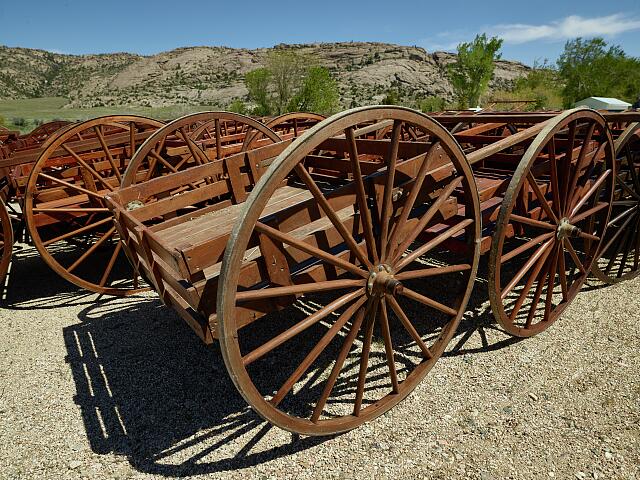
The handcart system had been introduced as a less expensive way for poorer Latter-day Saint converts, many of them European immigrants, to gather with the main body of the Church in Utah. Instead of purchasing expensive wagons and large teams of animals, emigrants placed their belongings into two-wheeled handcarts and walked west while pulling the carts themselves. Several companies successfully crossed the plains this way, but the Willie and Martin companies of 1856 departed dangerously late in the season and became the tragic exceptions.
The Church History Department’s rescue timeline shows just how rapidly conditions deteriorated. By October 19, the first major winter storm had struck. The Willie Company had exhausted its flour, while the Martin and Hodgetts companies made their final crossing of the Platte River during the storm. By October 25, the Martin Company’s daily ration had been reduced to only eight ounces of flour for an adult and four ounces for a child. On November 5, conditions had deteriorated so badly that the ration was cut again to four ounces for an adult and two ounces for a child.
The National Park Service history of Martin’s Cove describes approximately 600 members of the Martin Company being caught by the October 19 storm near the North Platte River. They continued through winter conditions while subsisting on starvation rations, eventually reaching the Devil’s Gate area in early November. The emigrants lacked adequate winter clothing, temperatures fell below zero, and powerful winds and heavy snow knocked down tents at the refuge that later became known as Martin’s Cove.
One survivor, John Kirkman, was only eight years old at the time. Remembering the scene later, he said, “Death had taken a heavy toll and the Ravine was like an overcrowded tomb.” The National Park Service currently estimates that approximately 100 to 125 members of the Martin Company died along the trail, most of them between the Casper area and the Salt Lake Valley.
This was not simply an unpleasant pioneer journey that encountered some snow. It had developed into a genuine survival disaster.
Brigham Young Turns the Attention of the Saints Toward Rescue
On October 4, 1856, word reached Salt Lake City that the late handcart companies were still hundreds of miles away. Brigham Young responded immediately. The following day he stood before the Saints and made rescuing the emigrants the immediate priority.
His remarks survive in a transcript preserved by the Church History Department. Rather than giving a vague appeal for charity, Young demanded action and told the Saints:
“Go and bring in those people now on the plains.”
The complete surviving remarks can be read in the Church History Biographical Database’s transcription of the October 1856 Brigham Young address. Young called for experienced teamsters, dozens of teams, wagons, and approximately 12 tons of flour. He argued that religious profession meant very little if the Saints were unwilling to physically save people who were in danger.
The response came quickly. The first major relief company under George D. Grant left Salt Lake City on October 7 with wagons carrying food, clothing, and other supplies. As the true severity of the emergency became apparent, additional rescuers, wagons, animals, and provisions were repeatedly sent east. This is important because the rescue was much larger than the story of any one man. Ephraim Hanks became one of its most memorable figures, but scores of rescuers and hundreds of Utah Saints contributed to saving the emigrants.
“The Hand-Cart People Are in Trouble”
Hanks’s famous spiritual experience occurred while he was returning toward Salt Lake City. As he remembered the event later, he was staying overnight when he heard the warning that the handcart pioneers were in trouble and that he was needed. For believers, the account is naturally interpreted as revelation. A historian can frame it more cautiously by saying that Hanks testified that he received a spiritual warning, while the events that followed can be compared against the documentary historical record.
What makes the account especially interesting is that Hanks did not portray himself as receiving a grand vision explaining everything that would happen. The prompting, as he remembered it, was practical: people were in trouble, and he was needed. When he returned to Salt Lake and heard Heber C. Kimball’s appeal for additional volunteers, Hanks’s remembered response was equally practical: “I am ready now!” President James E. Faust retold this episode in his April 1999 general conference address, “Obedience: The Path to Freedom.”
The official rescue chronology records additional rescuers, including Hanks, leaving Salt Lake City on October 27. By November 2, Hanks had reached and passed the Willie Company near Fort Bridger, telling them that more teams were coming to their assistance. Rather than stopping there, he continued east toward the Martin Company, whose condition was still desperate.
Into the Wyoming Winter
Hanks initially traveled with a light wagon, but winter conditions soon became so severe that wagon travel was no longer practical. In the account later quoted by President Faust, Hanks remembered a storm lasting for days and snow becoming too deep to continue with his wagon. Rather than turn around, he shifted his supplies onto horses and continued east on horseback.
That detail is easy to pass over, but it is one of the most impressive parts of the story. Hanks had no radio, paved road, weather forecast, GPS, satellite phone, snowmobile, emergency beacon, or professional search-and-rescue team. If he became lost, injured, or trapped by the storm, there was no guarantee that anyone would even know where to begin looking for him. He was traveling through a vast section of the American frontier in severe winter weather because somewhere ahead of him were people who desperately needed help.
The very conditions Hanks voluntarily entered were already killing emigrants farther east. At Martin’s Cove, the National Park Service records that snow, subzero temperatures, and powerful winds immobilized the company for five days. The emigrants had little shelter and very little food. Many were already physically exhausted before the storm began, which made exposure and frostbite even more dangerous. The National Park Service’s Martin’s Cove page provides an excellent outside-government account of these conditions.
Hanks Prays for Buffalo
As Hanks continued toward the Martin Company, he encountered one of the best-known episodes in the rescue story. According to his later account, he camped alone and prayed that he might find buffalo. Meat would help sustain him, but more importantly, it could be carried to pioneers who were surviving on tiny flour rations.
Hanks reported encountering buffalo and killing animals that supplied him with fresh meat. Whatever interpretation a reader places upon the timing, the practical result is well documented: on November 10, 1856, Ephraim Hanks reached the Martin Company with two pack animals carrying frozen buffalo meat. The Church’s detailed historical article “Go and Bring Them In” records his arrival and describes the immediate reaction of starving emigrants who surrounded him asking for pieces of meat.
The official timeline independently records the same event. On November 10, Hanks met the Martin Company, distributed buffalo meat, and reported that more help was coming. That same day, the company’s ration increased from four ounces of flour per adult back to eight ounces, while additional wagons became available to carry weakened emigrants. The complete rescue chronology can be viewed here.
To modern readers, “buffalo meat” may sound like a colorful frontier detail. To men, women, and children who had been surviving on ounces of flour each day while walking through snow, it was something entirely different. It was food arriving at the moment they desperately needed food.
The Scene Hanks Never Forgot
Hanks was deeply affected by what he saw when he finally reached the emigrants. He later remembered:
“The sight that met my gaze as I entered their camp can never be erased from my memory.”
The larger account describes thin, exhausted people moving slowly through camp while trying to prepare their small evening meals. Hanks had lived an unusually rugged frontier life and had already experienced military service, wilderness travel, and difficult conditions, yet he said the suffering in the camp was enough to deeply affect even a hardened observer. The Church preserves that account both in its historical publications and in Bishop Waddell’s 2023 general conference address.
The emigrants’ condition also demonstrates why the rescue cannot be reduced to the romantic image of strong young men pulling handcarts through snow. There were elderly people, children, widows, exhausted parents, sick emigrants, and individuals whose feet or limbs had frozen so badly that tissue was dying. Some had already buried family members along the trail and still had hundreds of miles separating them from the Salt Lake Valley.
Frostbite, Primitive Surgery, and Priesthood Blessings
The medical situation Hanks encountered was horrific. Severe frostbite had destroyed tissue in the hands, feet, toes, fingers, and legs of some emigrants. There were no antibiotics, sterile operating rooms, anesthesiologists, vascular surgeons, heated emergency departments, or ambulances. The treatment available was frontier medicine performed in tents and camps during a winter migration.
The Church’s extensive history of the rescue records accounts of Hanks treating dangerously frozen limbs and, when necessary, using his hunting knife after heating it in the fire to remove tissue or portions of limbs that could not be saved. The same account states that he prayed and administered to patients while performing this grim work.
Hanks also understood his work among the pioneers in explicitly religious terms. He later recalled moving among the sick and participating in priesthood administrations. His account describes people improving following some of those blessings, recoveries that he interpreted as manifestations of the power of Jesus Christ. Modern readers are free to evaluate those claims according to their own beliefs, but leaving them out would give an incomplete picture of what Hanks himself believed was happening. For him, the rescue was never merely an exercise in wilderness survival. It was service to fellow Saints carried out with the conviction that God had sent him there.
Martin’s Cove: The Landscape of the Disaster
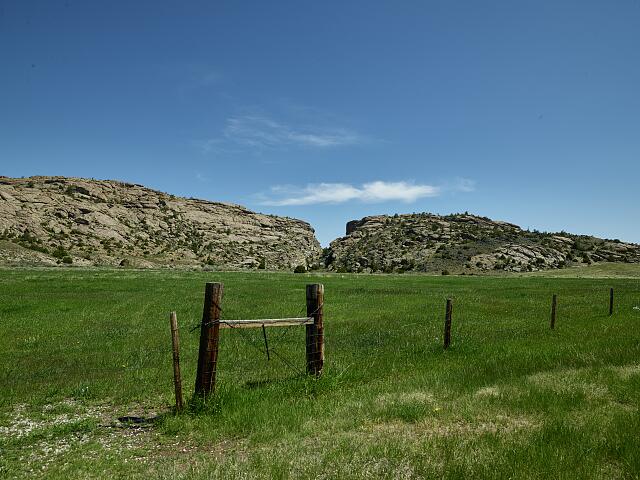
The geography of the rescue helps explain the severity of the ordeal. The Martin Company reached the Devil’s Gate area on November 2 and two days later crossed the icy Sweetwater River before taking refuge in a nearby cove among the Sweetwater Rocks. According to the National Park Service, strong winds and heavy snow knocked down tents, and the company remained trapped there with little shelter and few provisions until November 9.
Today, Martin’s Cove and Devil’s Gate remain among the most recognizable physical sites associated with the 1856 disaster. The locations also provide excellent historical imagery for this article because the Library of Congress maintains high-resolution photographs from the Carol M. Highsmith Archive with reuse information clearly stated in the individual records.
Hanks Was One Man in a Much Larger Rescue
Hanks’s personal story is spectacular, but historical accuracy requires emphasizing that he did not rescue the Martin Company by himself. George D. Grant, Robert T. Burton, Joseph A. Young, Daniel W. Jones, Redick Allred, William H. Kimball, and many other rescuers played vital roles, while Latter-day Saints throughout Utah donated flour, clothing, blankets, animals, wagons, and labor.
The scale of the effort became enormous. More rescue wagons continued arriving throughout November. On November 13 the Martin Company met additional wagons dispatched following the late-October call for help. By November 16, additional food allowed adult flour rations to return to 16 ounces, and on November 18 enough wagons had finally reached the company that everyone could ride. The progression can be followed day by day in the official Church History rescue timeline.
The rescue therefore became much more than an adventure involving a single famous frontiersman. It was a massive community response in which Latter-day Saints who were relatively safe in Utah diverted supplies, transportation, animals, and manpower toward strangers hundreds of miles away. In an age before modern emergency management, the Saints effectively constructed their own rescue network and pushed it east through the mountains until it reached the emigrants.
The Long Road Home
Even after Hanks arrived with food on November 10, the Martin Company’s ordeal was far from over. Additional wagons reached them over the following days, and the weakest pioneers were increasingly able to ride rather than continue walking. Freight belonging to accompanying wagon companies was unloaded and stored so the wagons could be used to transport suffering emigrants. Rescue teams established supply points along the route, while more aid continued coming from Utah.
On November 18 the Martin Company reached the rescue station near South Pass, where enough wagons were finally available for all members of the company to ride. They reached Fort Bridger on November 23 and continued west toward the Salt Lake Valley. Finally, on November 30, 1856, rescuers and rescue wagons brought the Martin Company into Salt Lake City.
The journey that had begun as an attempt by poor converts to gather with fellow Saints had become one of the most devastating episodes in the history of Mormon migration. Yet the final weeks also became one of the most remarkable organized rescue operations of the pioneer era.
History, Memory, and Miracle
Stories from pioneer history were often repeated for decades before being written down, and dramatic details sometimes became simplified or expanded as one generation told them to another. Hanks’s account deserves the same careful treatment. His famous description of hearing a voice, his prayer for buffalo, and many of his detailed memories were recorded years after 1856. Those elements should be presented as Hanks’s own testimony and recollection, not as though a journalist had stood next to him documenting every word.
At the same time, the core of the story does not depend upon accepting every later recollection literally. The historical record confirms that Ephraim Hanks was an experienced Mormon Battalion veteran, that he joined the 1856 rescue effort, that he traveled east, that he passed the Willie Company while continuing toward the Martin Company, that he reached the Martin Company on November 10, that he distributed buffalo meat, that he helped care for suffering emigrants, and that additional rescue teams eventually brought the survivors into Salt Lake City.
For believers, Hanks’s testimony adds another dimension. He believed that God had warned him that people needed help, that his encounters with buffalo occurred providentially, and that priesthood power blessed people who were suffering. The historian can document the rescue; faith interprets what those events meant.
There is no real need to force the two into conflict. Hanks himself believed both things simultaneously: he needed to rely on God, and then he needed to get on his horse and ride.
“I Am Ready Now”
Of everything associated with Ephraim Hanks, the four words “I am ready now” may provide the clearest explanation of why his story remains powerful nearly 170 years later. His statement was not important merely because he was enthusiastic. Hanks could leave immediately because his life had already prepared him for the work that needed to be done. He knew how to navigate the frontier, handle horses, hunt animals, survive severe weather, travel independently, improvise when equipment failed, and continue functioning under conditions that would overwhelm an inexperienced traveler.
The same practical preparedness existed alongside his religious faith. Hanks believed a spiritual prompting told him that suffering people needed him, but the prompting did not magically place buffalo meat in their camp or transport him hundreds of miles through the snow. He still had to saddle his horses, ride into the wilderness, endure the weather, hunt the animals, carry the food, enter the suffering camp, and do some of the ugliest and most difficult work imaginable once he arrived.
That combination may be what makes Ephraim Hanks such an extraordinary figure in Latter-day Saint history. The story is not simply that a man prayed and waited for a miracle, nor is it merely that a rugged frontiersman relied entirely upon his own strength. Hanks believed God had called him to help, and then he used every ability he possessed to answer that call.
The snow was deep. The distance was enormous. The people waiting ahead of him were starving, freezing, and dying.
When the call came, Ephraim Hanks believed he already knew what he needed to do.
“I am ready now.”
And then he rode into the blizzard.
Sources and Further Reading
Church History Department — Willie and Martin Handcart Rescue Timeline
https://history.churchofjesuschrist.org/timeline/historic-sites/wyoming/sixth-crossing?lang=eng
Church History Biographical Database — Ephraim Knowlton Hanks
https://history.churchofjesuschrist.org/chd/individual/ephraim-knowlton-hanks-1826?lang=eng
Church History — Brigham Young’s October 1856 Rescue Address
https://history.churchofjesuschrist.org/chd/transcript?name=transcript-for-young-brigham-remarks-deseret-news-15-october-1856-252
The Church of Jesus Christ of Latter-day Saints — “Go and Bring Them In”
https://www.churchofjesuschrist.org/study/ensign/2006/12/go-and-bring-them-in?lang=eng
W. Christopher Waddell — “More Than a Hero,” October 2023 General Conference
https://www.churchofjesuschrist.org/study/general-conference/2023/10/46waddell?lang=eng
James E. Faust — “Obedience: The Path to Freedom,” April 1999 General Conference
https://www.churchofjesuschrist.org/study/general-conference/1999/04/obedience-the-path-to-freedom?lang=eng
National Park Service — Martin’s Cove
https://www.nps.gov/places/000/martins-cove.htm

I’m bookmarking this one; the historical context adds a lot to the story.